Hi dear all!
Finally we have time and place to send you a belated report about our journey progress.
All is well with us, we have reached a lovely town El Bolson, slightly darkened by the sun, having pedalled approximately 130 kilometres (not including 45 kilometres which we cycled in the Bariloche vicinity).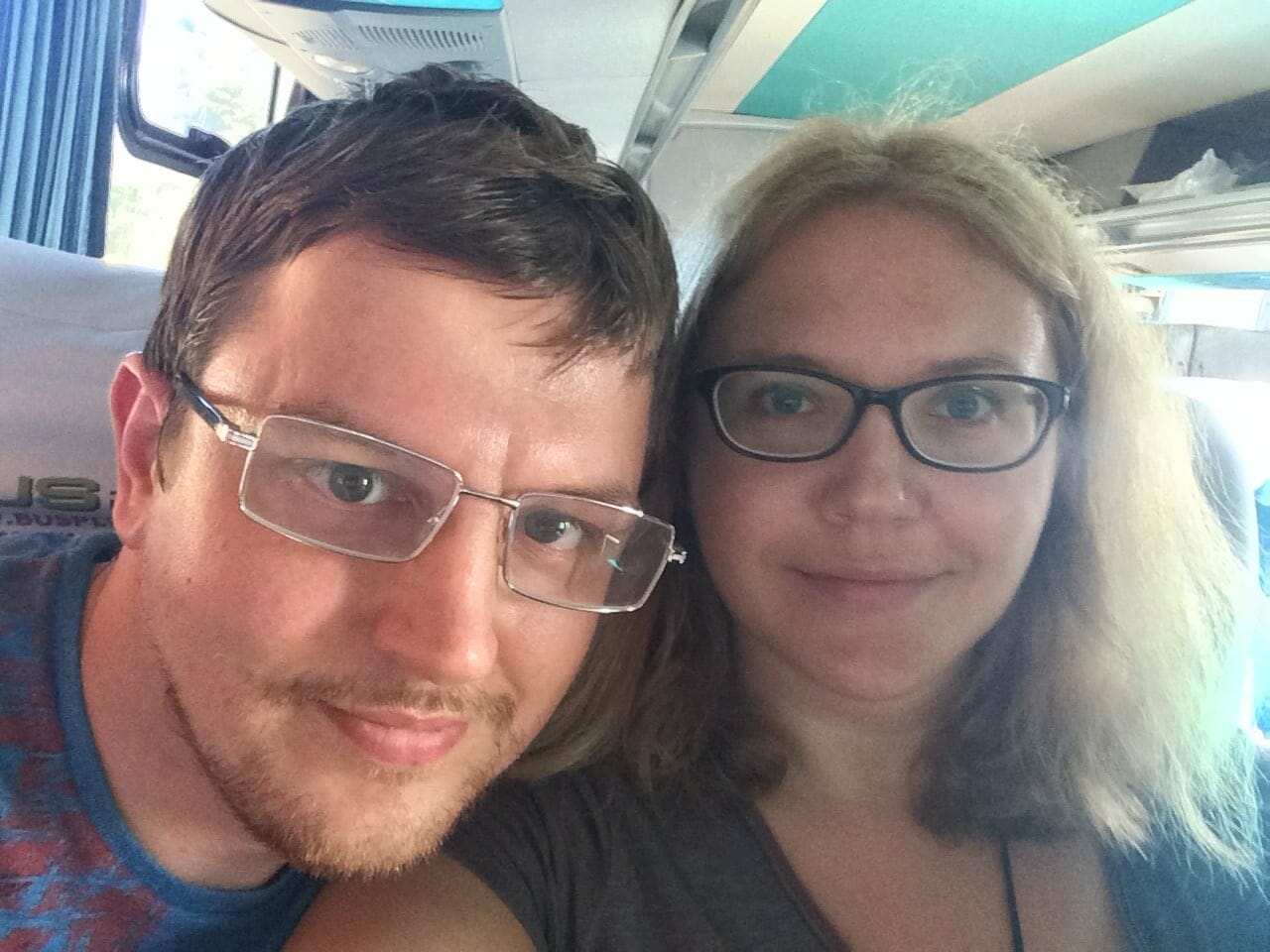
I posted our story of leaving Santiago in Russian but sorry to our English speaking friends, I didn’t have a chance to translate it into English then. The story was quite long, so to keep it short, we only managed to leave Santiago for Osorno which is in the Chilean Patagonia, from the third attempt. We had an issue buying bus tickets to Patagonia in Santiago because most bus companies going to Patagonia refused to sell us tickets when they heard that we were travelling with bicycles.
One company agreed to sell us tickets, it was a small company named Ruta 5. They promised that we wouldn’t have issues taking the bikes onboard, but when we actually arrived at the bus terminal half and hour before departure, there was hardly any room left in the luggage department of the bus and the driver told us that they wouldn’t be able to fit the bikes in there. After thingking hard about this problem for a while the staff at Ruta 5 office offered us to either go now and let them bring the bikes to Osorno in 2 days which we refused, or to go in 2 days with the bikes, but the bikes must be fully disassembled – we decided to go with the latter option.
 In 2 days we managed to board the bus with all our luggage, but in 70 kilometres from Santiago the bus broke down. The company started sending passengers away with buses going in this direction, but not to Osorno, to a different town which caused a huge hussle among the passengers. The people tried to persuade us to leave the bus, however we knew that our luggage wouldn’t fit anywhere else and stayed in the bus. We spent the night there and the next morning another bus came which took the remaining passengers, but again there was no space for our boxes.
  We had to return to Santiago on the broken bus together with 3 other passengers, 2 of which had gone to the loo when the last bus came and were not taken for this reason and one was sleeping in the broken bus and was overlooked.
Ruta 5 ended up buying us tickets on another company’s bus for the same day and paid for our lunch, so we left for Osorno in the evening and finally got there in the morning of the next day. Very soon we boarded a bus going from Osorno to Bariloche and arrived there safely on the same day. That was the longest attempt to leave a place but finally we made it.
Travelling on Chilean buses with luggage turned out to be quite expensive. For example, we paid 36000 Chilean pesos for 2 bus tickets on the Bariloche bus (roughly 36£) but 50000 pesos for 2 excess luggages (roughly 50£).
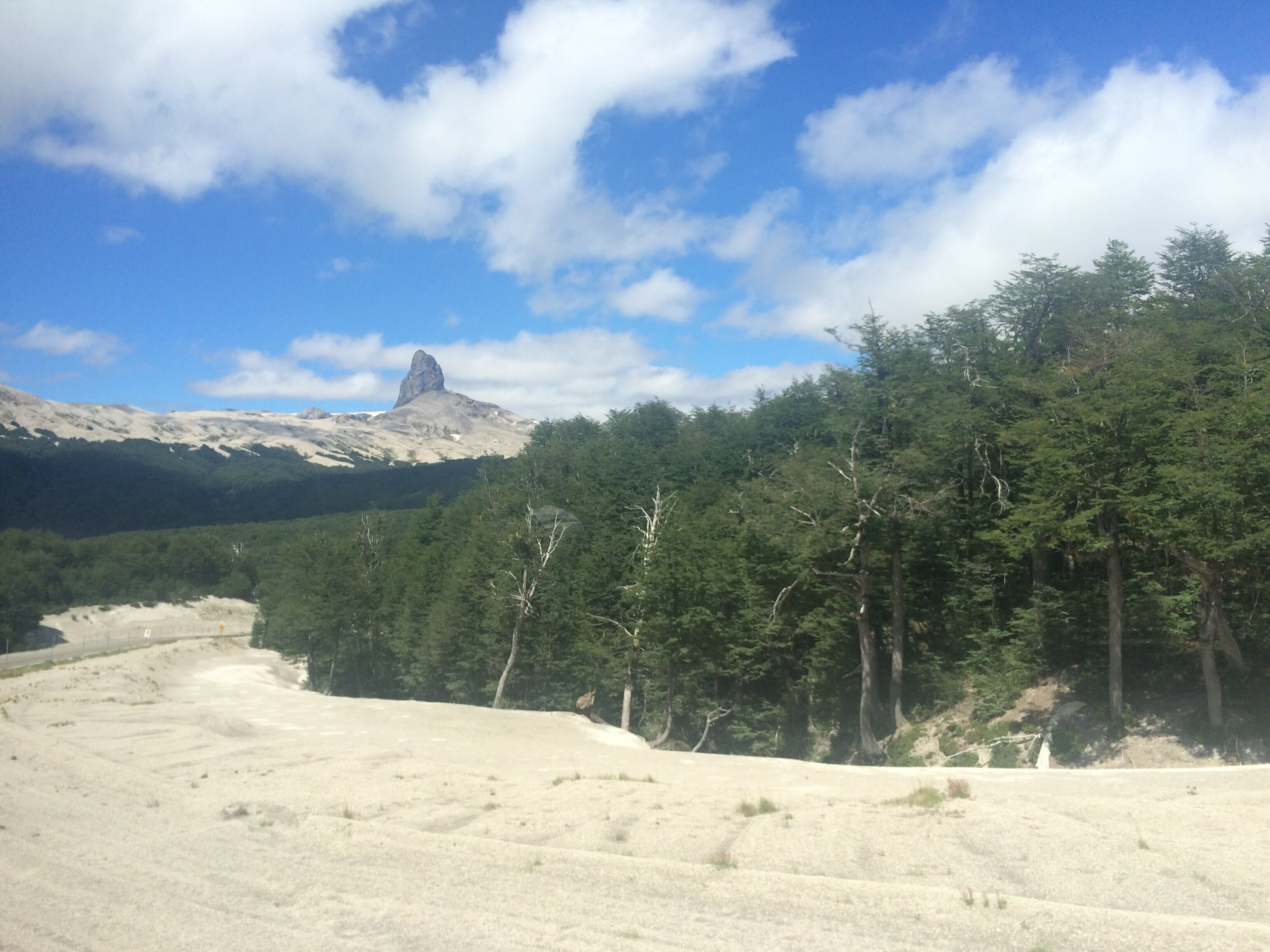
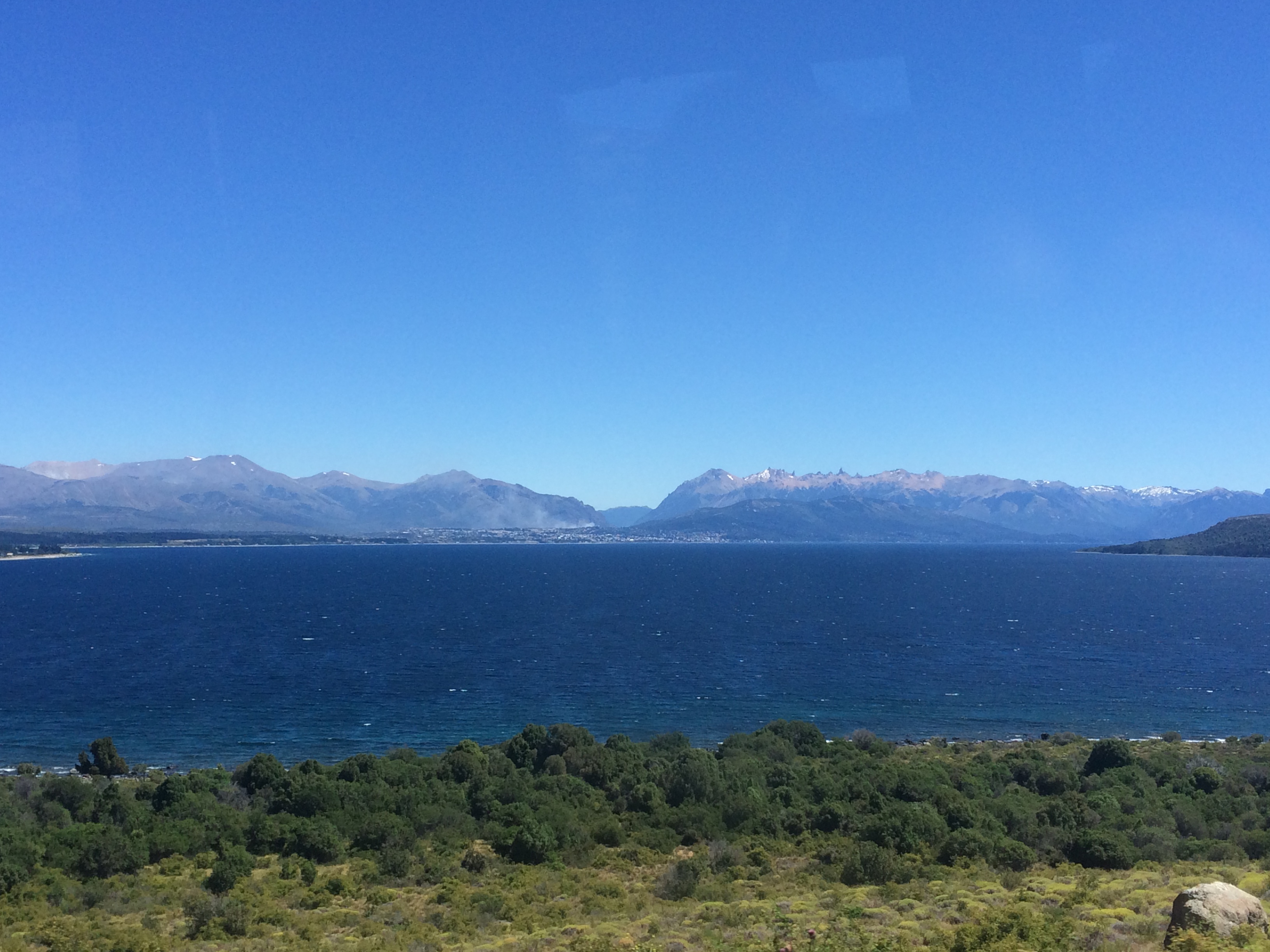
We entered Argentina in the area of Nahuel Huapi national park, having crossed the Andes between the Chilean and Argentinian border posts. We didn’t know by the way that the border posts were located at the different sides of the mountains. Having received exit stamps into our passports in Chile, we got back on the bus thinking that in a couple of hundred of meters we will get to the Argentinian border, but the bus went on a mountainous road in the forest and kept going for 10, 15 minutes so we panicked a little thinking we had missed the Argentinian border somehow. Fellow passengers spoke English and explained to us that the Argentinian border is quite far. Indeed it took the bus 30 or 40 minutes to arrive there.
 Having arrived in Bariloche, we found out in the tourist information at the bus station where bike services and campsites were. First of all we had to assemble the bikes. The campsite nearest to the town was in 3 kilometres, we decided to go there, there was plenty of time before the night so we left our bags in the left luggage at the bus station and got out of the station with our bikes in the boxes. The question was still open as to how to get to the bike service, as all taxis we could see were small cars where the bikes wouldn’t fit. We were going to speak to taxi drivers, when all of a sudden a man appeared in front of us. He looked European, was of a slim built and was wearing jeans, shirt and a warm cap. He looked like a traveller who had been on the way for a while and it made him quite tired and worn. “Need accommodation?” – he asked us in English. “No, – I said, – we are going to a camping. What we do need is a car to take our bikes to the bike service.” The man answered: “Let me take you there, I have a pickup truck”. This is how the solution of our problem fell on us from heaven. The man’s name was Gustavo. He spoke good English (which is not typical of Argentinians) and sympathised with cyclists so was happy to help. Not only he brought us to the bike service but also he bargained for us with the master at the bike shop and got us a discount. He gave us his contacts and told us to get in touch in case we needed him. I didn’t think that we would meet him again, but a couple of days later he popped up in his usual manner, out of the blue, just when we needed him. But I will tell about it later.
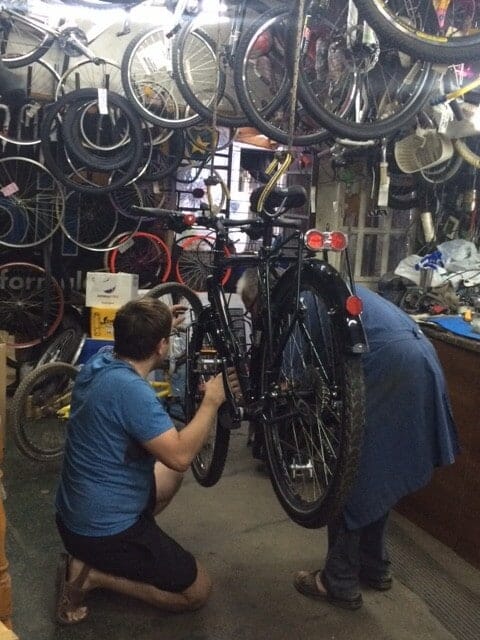
The bike service where we came looked like a cemetery for perished bikes. There was not a single piece of room from where various bike waste was not sticking out, and from the ceiling old bikes were hanging which most likely were used for their parts which were still in good condition. The scene looked quite scary. The old master told us to come back in two hours and the bikes would be ready.
We should have probably stayed and watched the work, but we were super hungry as in the buses we were given only cookies and some likelihood of coffee, and it was getting late already, so we left to look for food. I must say that I had some strange expectations in regards to Bariloche, as I had read a lot of praise about the town so in the beginning was unpleasantly surprised: the part of town where we found ourselves looked like a deserted village. Sunlit empty streets, modest houses and very, very old cars: that’s how we saw Bariloche for the first time. We went to the street about which we knew that it was the main one – Mitre – and couldn’t believe it was the right street. Almost everything was closed. One shop was open, it was called Casa de Comida (House of Food) and we walked in there to check if we were in the right place. Indeed it was Mitre Street, how strange. Something is wrong, it cannot be the centre of tourist life of a famous resort. We bought a couple of “empanadas” – typical South American pies which may have different filling, like carne (meat), pollo (chicken), humita (a kind of corn cereal) and went on to look for a place for a proper meal. After a couple of blocks we went in to a hotel and asked again where all life was. The receptionist explained to us that it was siesta now – wow, we totally forgot about this phenomenon. None of the restaurants were open and he suggested we go to one of the pubs or to Macdonalds.
The receptionist exchanged some US dollars to Argentinian pesos for us. By the way, until recently the black market flourished in Argentina and one could exchange dollars on the street or at special exchange points at “blue dollar” rate which was 30% better than the official rate. For this reason people were travelling to Argentina carrying loads of cash with them. We read though a couple of days after we came to Argentina that after the new president came to power the blue dollar stopped being such good value and is only slightly better than the official one, so there is no point taking lots of cash to the country anymore.
Moving towards the centre of Bariloche we saw more and more shops, restaurants, cafes and Mitre eventually did look like a busy tourist street.
We decided to go to Macdonalds as it was one of few placed which were open and it’s familiar and cheap. We went there and I started making an order. Looking at the prices I thought tiredness got the best of my thinking: I couldn’t see anything cheaper than 10 bucks. We ordered chicken fillet wrap, burger, 2 coffees and paid 30 dollars for it. Is this what they call cheap fast-food in Argentina?? We felt deceived in our justified expectations.
Later we understood that in Bariloche it is better to eat further from tourist spots, somewhere where locals buy food, because most of Bariloche’s centre is a tourist trap. Things are either expensive or crazy expensive. For example a cup of bad coffee may cost 4.5 dollars. Accommodation is also expensive. Our camping cost 30 dollars per night – this is just for a piece of land for your tent, charger, toilet and shower. I think this is the only way to live on a budget in Bariloche (let alone couch surfing and alike, which we never tried, or beds in a hostel which was not an option for us either).
Having eaten, we ran back to the bike service. When we came the bikes were assembled, but the old master hadn’t installed the front rack on Igor’s bike. He explained the screws fell out of the small box we had them in and he couldn’t find the right ones to fit the rack. It took us another hour to fit the rack so it was quite late when we left the bike service and went to the bus station to pick up our bags. It was after 9 pm when we put all bags on the bikes and were ready to look for the campsite. It seemed easy on the map: always go in the same direction along one street, but in reality we couldn’t figure out how far we had gone already and some streets were without names on the map which was very confusing. We had to stop every 5 minutes to check where we were and it got completely dark after a while. We kept cycling and no camping in sight. We decided to go to any hotel if our search was not successful in another 15 minutes. Then we got lucky: we met a couple of guys who knew exactly where the camping was. It was very close and in 5 minutes we saw the sign “Selva Negra camping”. We exhaled but it was too early to exhale as after this sign was another one “Ascend 250 metres”.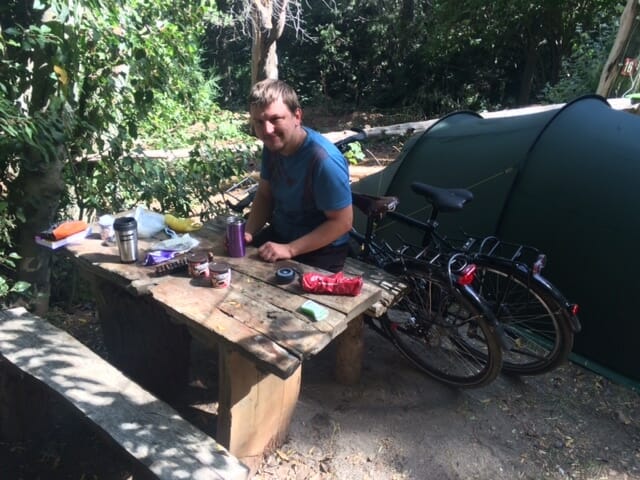
I don’t know how we climbed this hill. Probably on pure adrenaline. The hill was not easy to walk up without laden bikes, and we had at least 35 kilos on each. Midway we saw a right turn which didn’t look like entrance to camping though. Igor left me there with the bikes and ran upwards to check if the entrance was over there. In the meantime a car came from downside and showed intention to turn right, where I was standing with the bikes. It was easy to move my bike to the side, and Igor’s has an extremely inconvenient stand: in order to get the bike off it, you need to lift it’s back and kick the stand forward to remove it. I tried to lift the bike’s back and dropped it. 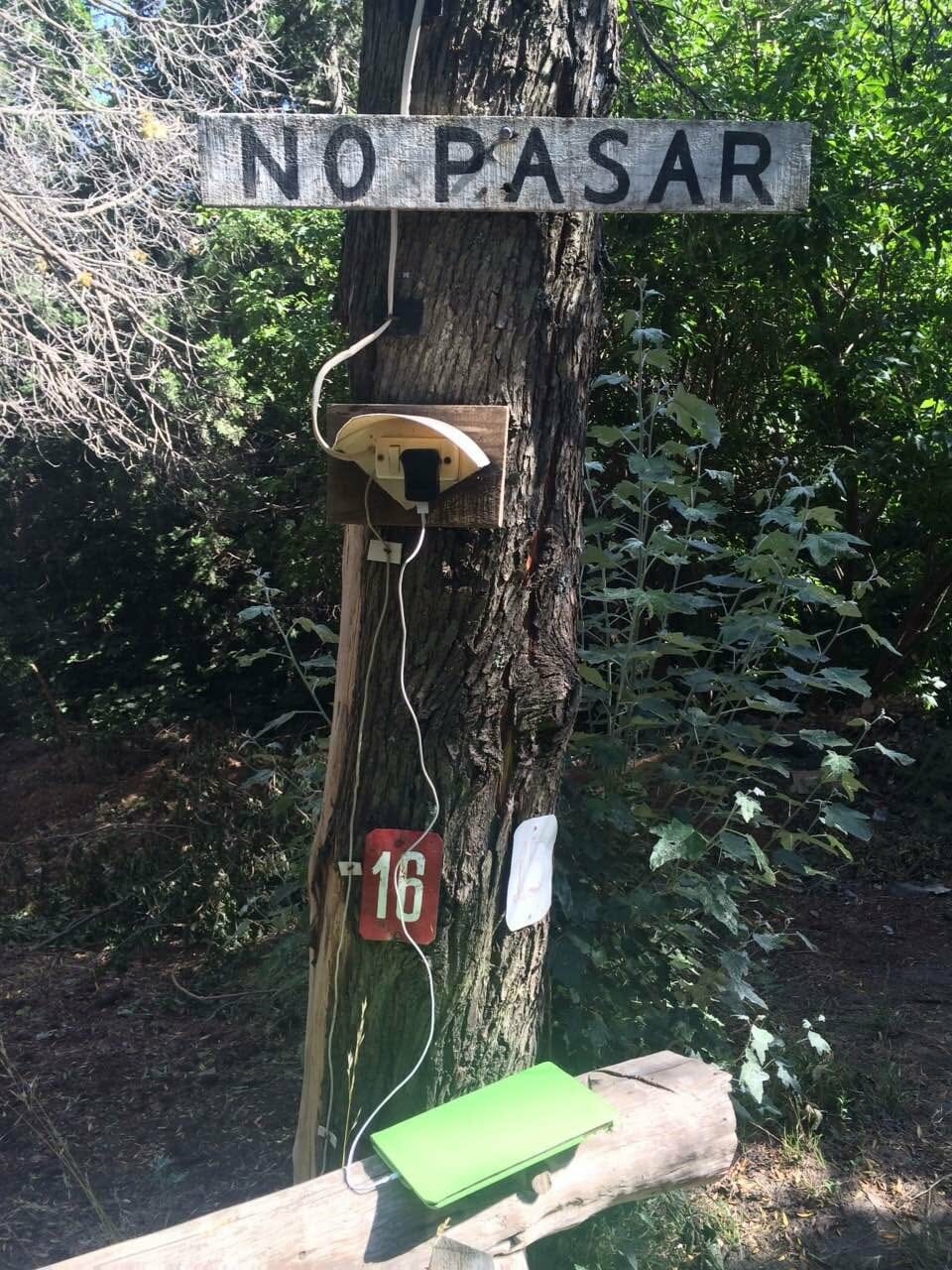 After this no power on earth could make me lift it, I couldn’t even move it a little bit. The car was there still waiting to turn. Thankfully, Igor came and helped me to lift the bike, strong guy! A strict woman went out of the car in the meantime and started preaching that this was private property and we couldn’t enter it and the campsite was higher on the road.
Thanks God these were the last challenges of that day. The campsite turned out to be full but they found us one place in the corner and soon we were sleeping the tent like logs. It was a long day, our first day in Argentina…
To be continued!