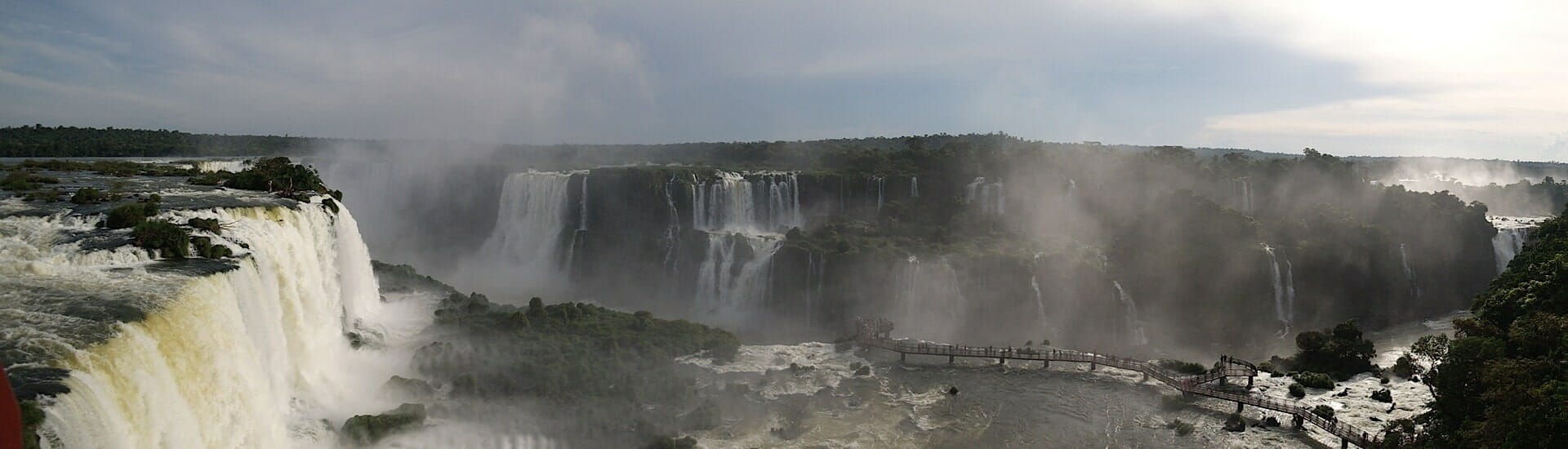
One of the sights that couldn’t have been missed in the South America were Iguazu Falls.
Preempting myself, I will say that the falls justify – and exceed – any expectations, and no photo can reflect what one can see with their own eyes. Without doubt, Iguazu are the most stupendous waterfalls we have ever seen and many times, looking at them, I caught myself thinking that it was worth to have come to the South America just for this sight alone.
The waterfalls are situated on the border between Argentina and Brazil. It is possible to see them from either country, and the views will be very different. We reached the falls by bus from Buenos Aires. The town you have to go to is called Puerto Iguazu. The distance between Buenos Aires and Puerto Iguazu is quite big: around 1300 kilometres, it takes around 18 hours by bus. The trip is not as bad as it might sound, because buses in Argentina are very comfortable, mostly double-deckers, there are meals and drinks onboard, we even had beer on ours. It was all included in the price of the tickets. We had bought tickets to the front seats on the second deck, right in front of the window, and enjoyed great unobstructed views on the way.
Puerto Iguazu is a lovely town. There is a small square on the bank of the rivers Parana and Iguazu, from where one can see Brazil and Paraguay. This place where three countries meet is called “Tres Fronteras” (“Three frontiers”).
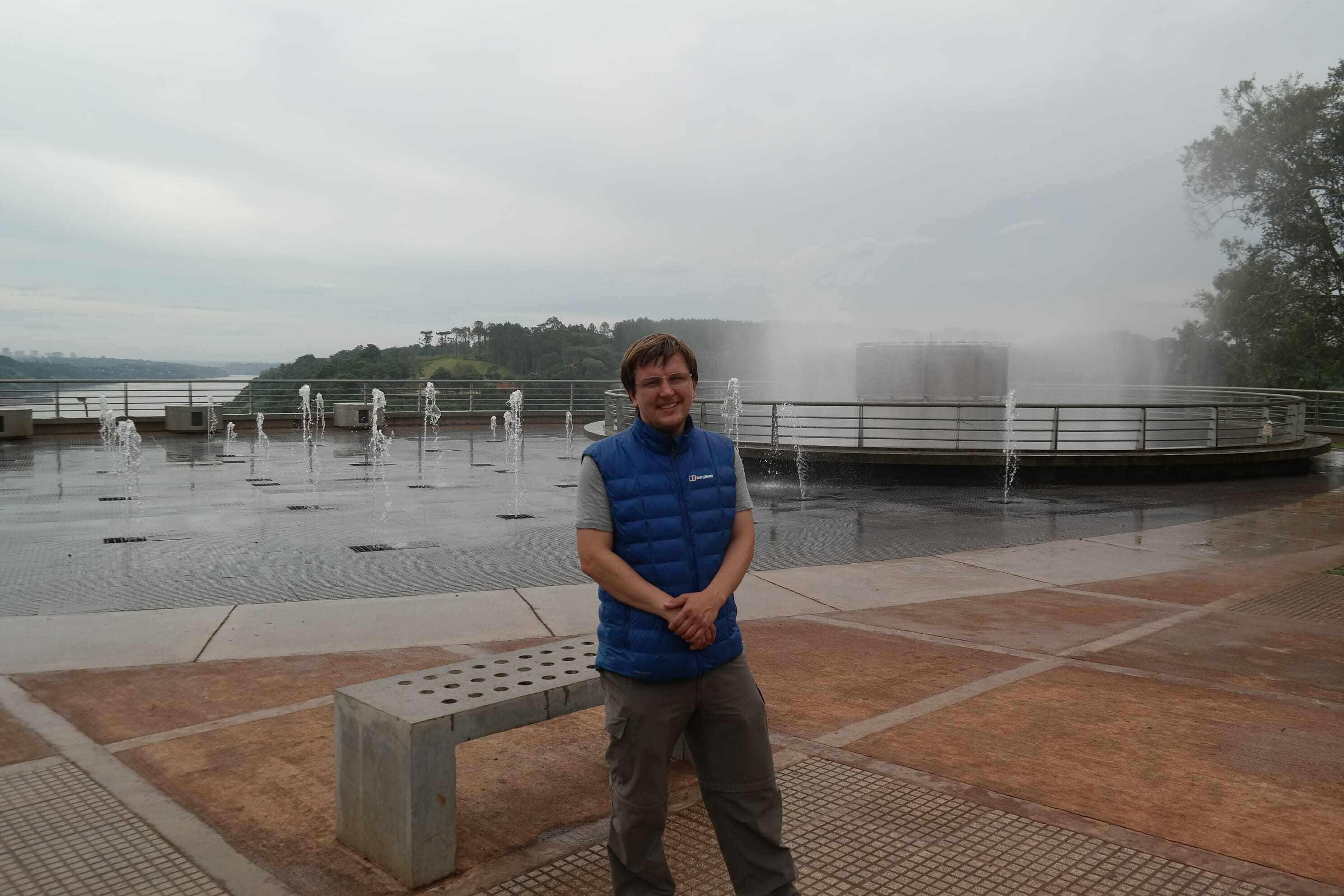
From Puerto Iguazu you can get to the Iguazu National Park by bus. It is not far away, about 30 kilometres.
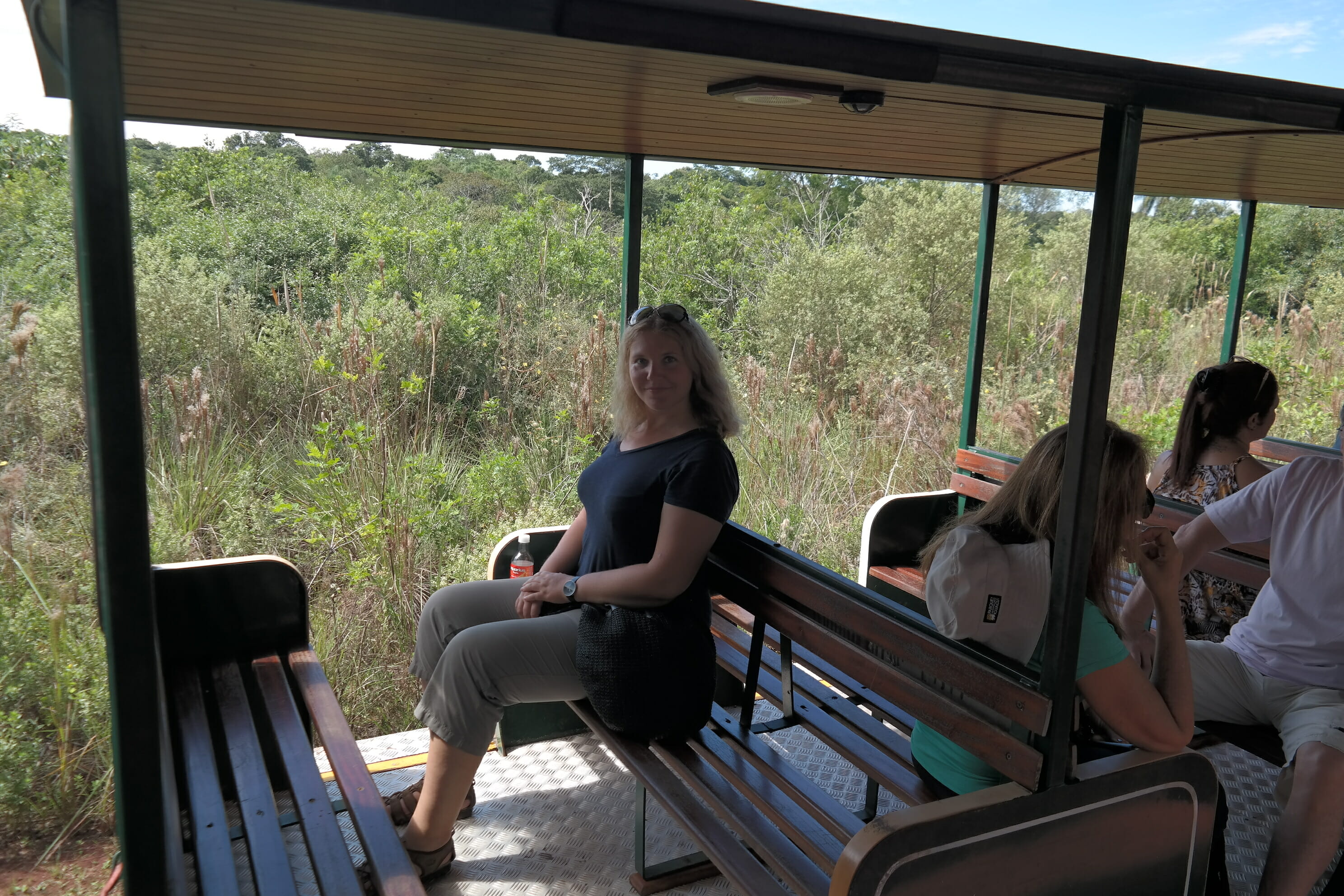
The entrance to the park is paid, the territory is very pretty and the paths are neat and well-cared-for. There is quite a distance between the entrance and the falls and there is a train that can take you there.
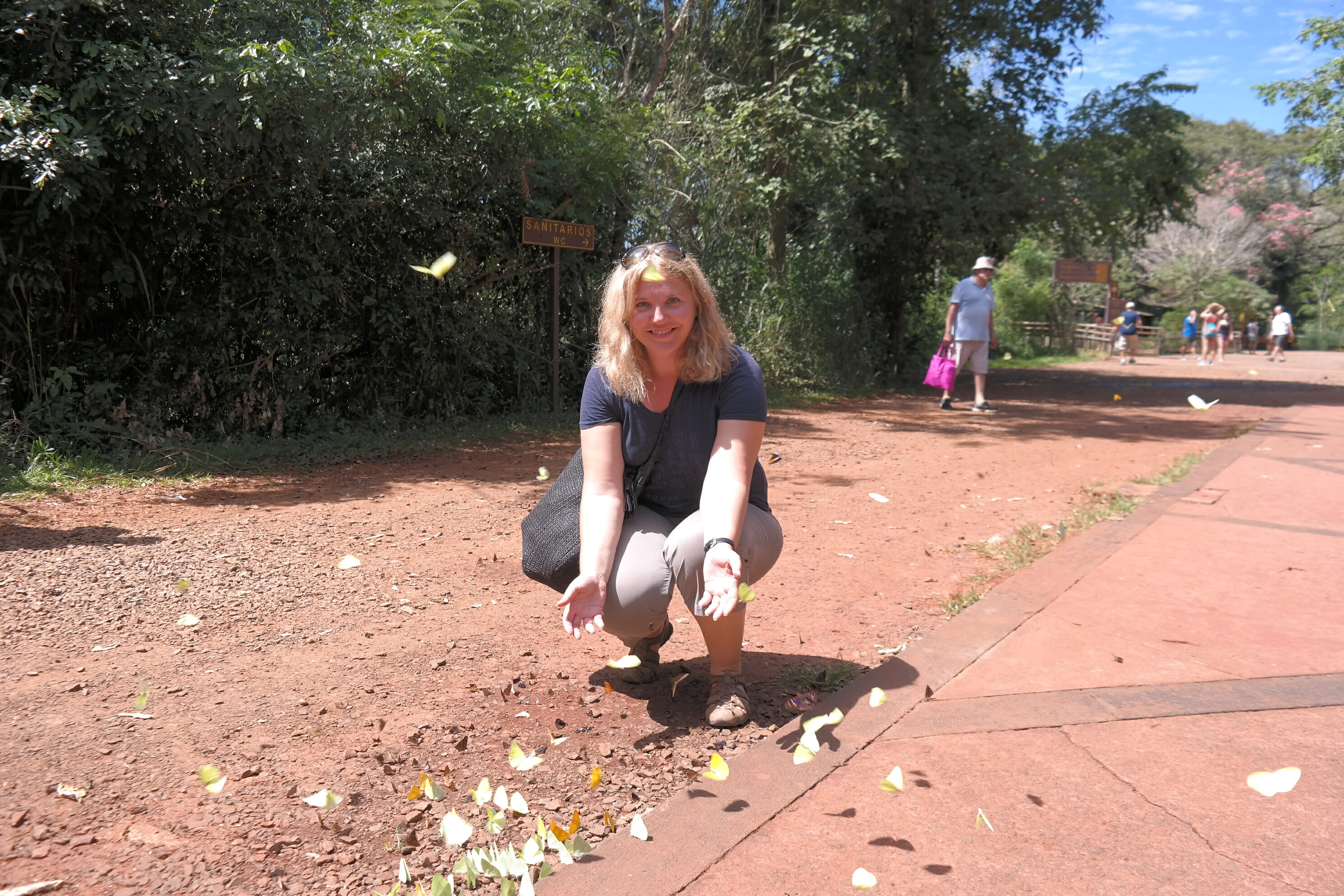
The first thing that was striking were butterflies. There were thousands of them! As soon as you set your foot on the boardwalk leading to the first waterfall called Garganta del Diablo (which means “Devil’s Throat”), butterflies literally cover you. They were landing on my bag, legs, arms and head. Quite an unusual sensation.
And of course – coatis. These are funny animals with long tails that live in the Americas. They resemble raccoons. I read somewhere that it’s not the waterfalls that are the real stars in the Iguazu National Park, but coatis, and it is very close to the truth. I am sure that they are photographed as much as the falls. Coatis are real thieves, in the cafes they’d steal your food the moment you gape. The stuff at the park cafes chases them away with mops but they are not easily scared.

While walking in the park, we witnessed a few coatis attack a woman who had opened a pack of crisps. They circled her and were slowly getting closer to her, like a gang of robbers.

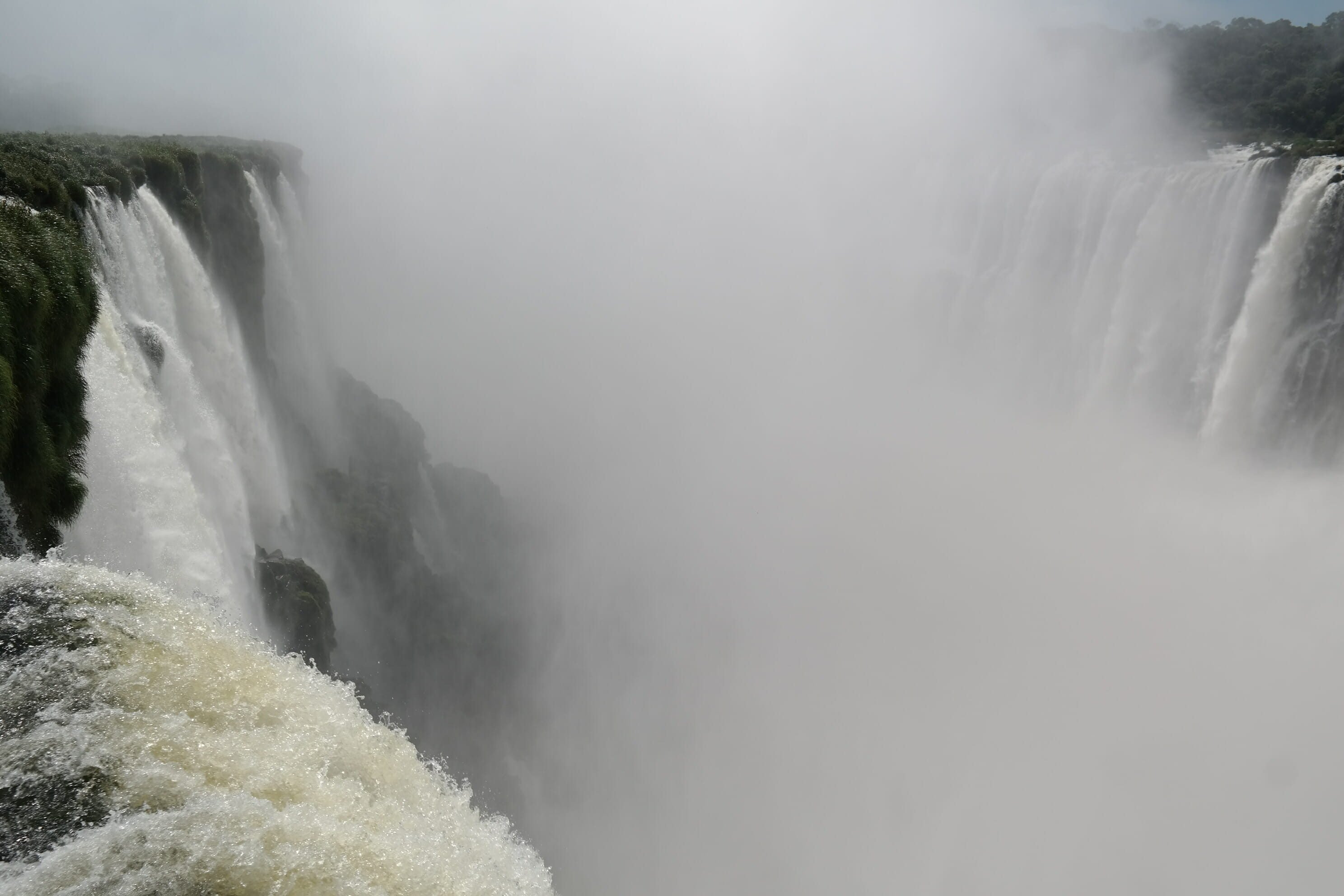
As I said, a boardwalk leads to the first waterfall, and the walk here is a very pleasant one. The waterfall can be spotted from afar by a cloud of billowing water dust. There is a fissure in the ground where the waters of the river flow, and visitors of the park can see it from above, standing near the edge. The name “Devil’s Throat” is completely justified as the crack in the ground does resemble a maw into which tons of water tumble down with roar. It is possible to see the “throat” from a different angle – from Brazil, from where it is possible to observe the waterfall from top to bottom.
This sight is magnificent, being so close to the mighty water flows is impressive. Sometimes wind blowing from the waterfall carries drops of water with it, leaving wet marks on people’s sunglasses and camera lenses. There are so many tourists there that one has to wait for a few minutes before a spot for taking a photograph frees up, but this happens on all viewpoints around the falls.
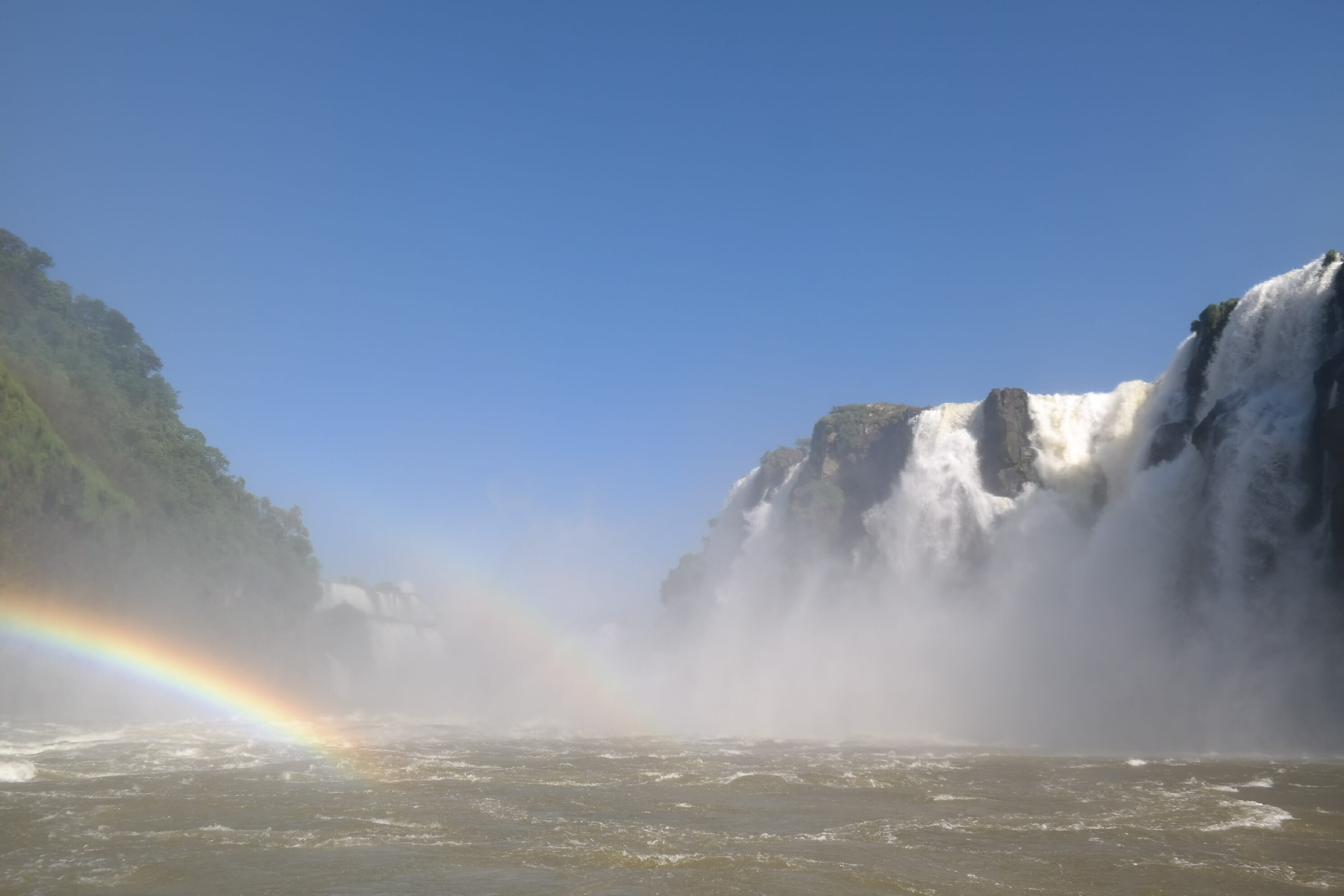
From Garganta del Diablo we walked back to the train station and went to the other end of the park where the main walking route lay. The next point was a boat ride under the waterfalls. It is better to wear a swimming suit on this ride as you are going to get soaked through. The boat gets as close as possible to the water streams and you can take in the sight from a very small distance. It’s is definitely a ride worth taking.
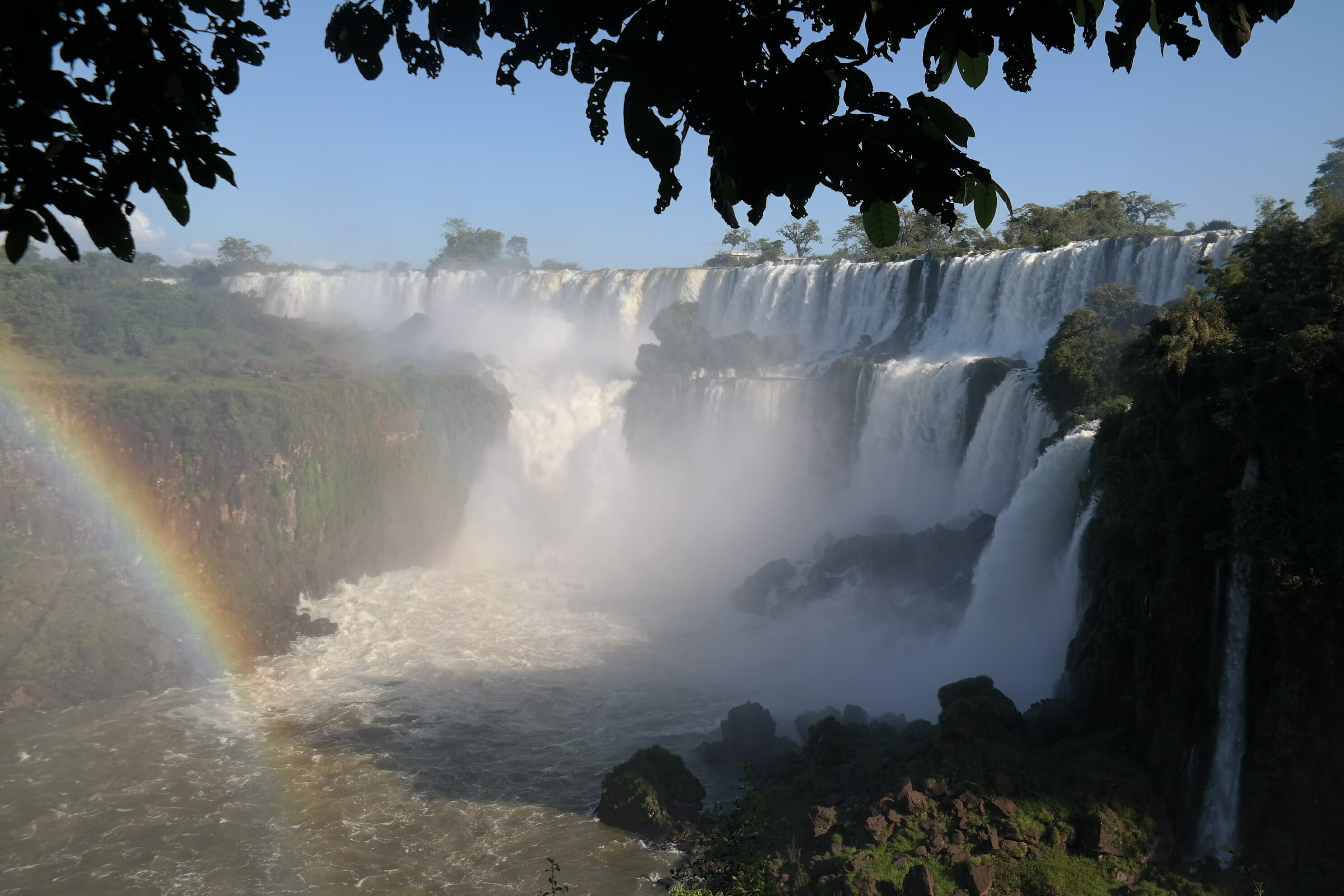
…We spent the rest of the day walking along the paths in the park and admiring the views of different waterfalls. In some places we could see them from a distance and in others we could come close to the crest of a fall and see it from above.
A lot of people argue about which view is better – from Argentina or from Brazil. I had an impression after reading reports on the net that most people prefer the Argentinian side. We decided to check it ourselves and after reaching Brazil we went to the waterfalls again.
Crossing the border between Argentina and Brazil is worth mentioning. Puerto Iguazu is located very close to the Brazil border and it is possible to cross it by a city bus. Many locals go to Brazil and back. Our bus stopped at a stop called unpretentiously “The border”. We were the only ones who got off there. We walked to the border crossing point, there was not a single person there. We filled in the cards as usual. I was worried about our not speaking Portuguese, but we were not asked anything. Also there was no mentioning of a customs check, no-one cared about our bags. After leaving the border point, we started thinking about how to get to Foz do Iguaçu – the Brazilian city closest to the border. There was a taxi there but it turned out to be too expensive. We ended up waiting for another bus and got to the city using the same ticket. I don’t remember ever moving from country to country by a city bus before.
By the way another odd phenomenon was that as soon as we crossed over to Brazil, it became much hotter, probably due to the lack of trees.
We checked in a hotel in Foz do Iguaçu and the next day we went on an excursion: first to a power station Itaipu and then to the waterfalls.
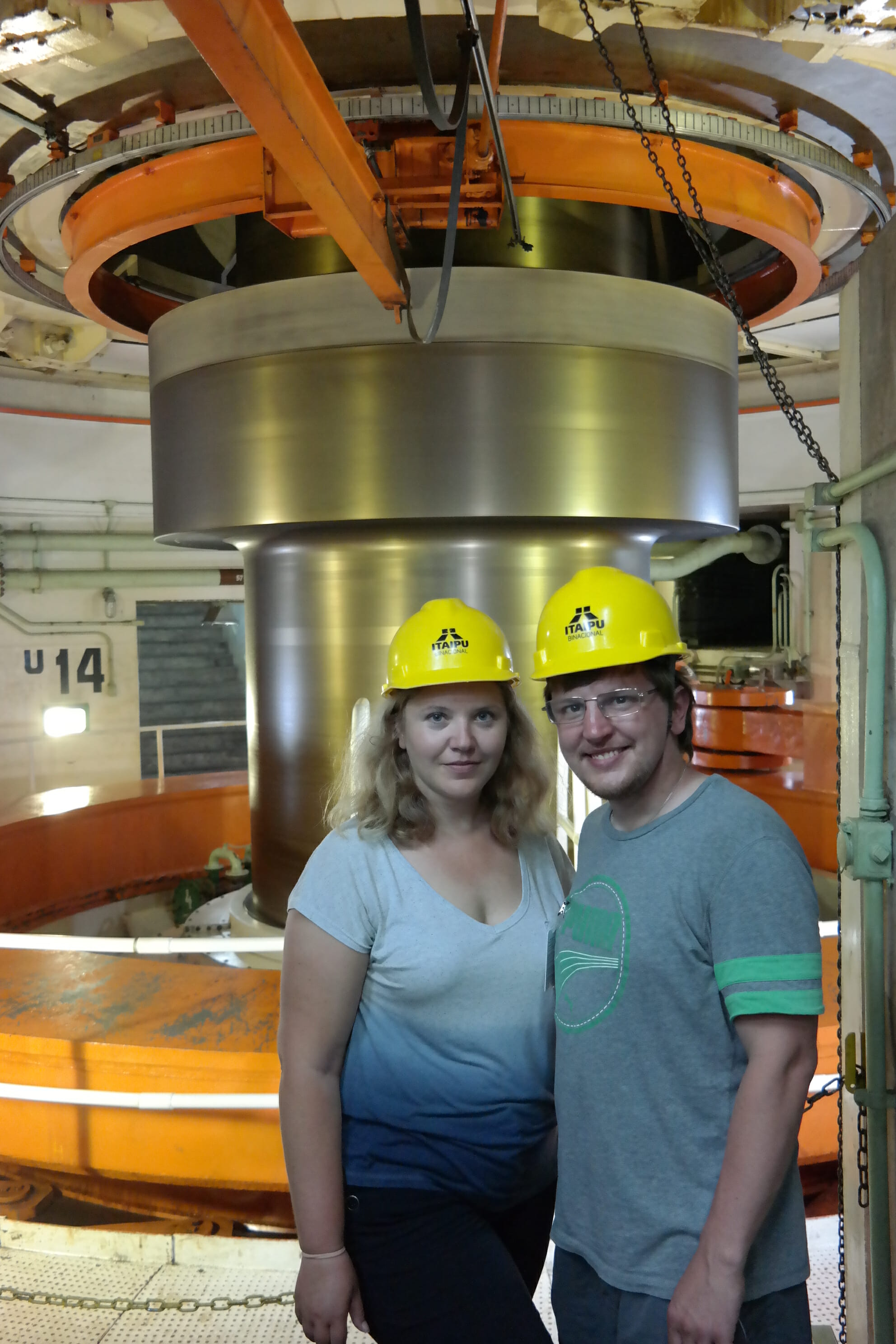
The tour of Itaipu turned out to be very interesting. The power station used to be the largest in the world (now the biggest one is in China). It is partly located in Paraguay, which gives us an opportunity to say that we have been to Paraguay too. We went inside the dam, got down to the generators level, and the guide was telling us lots of interesting facts about the station and its construction all the time – all in all, a great educational tour.
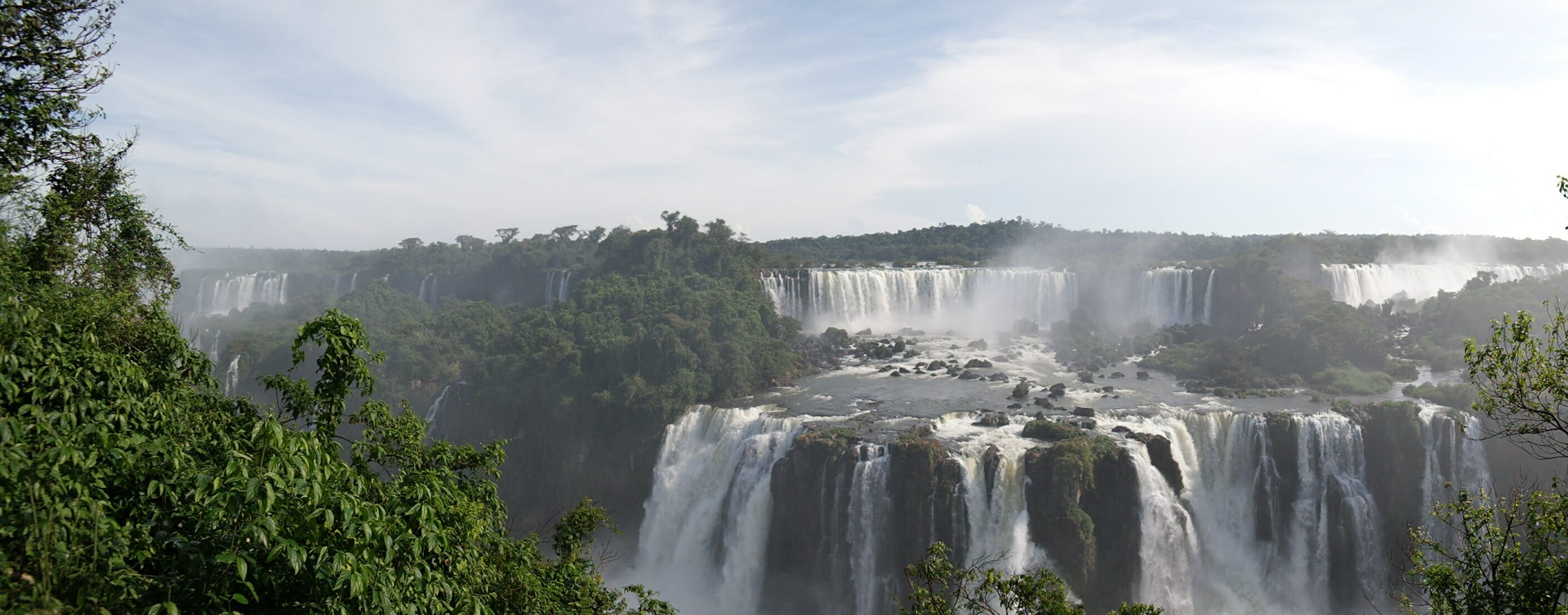
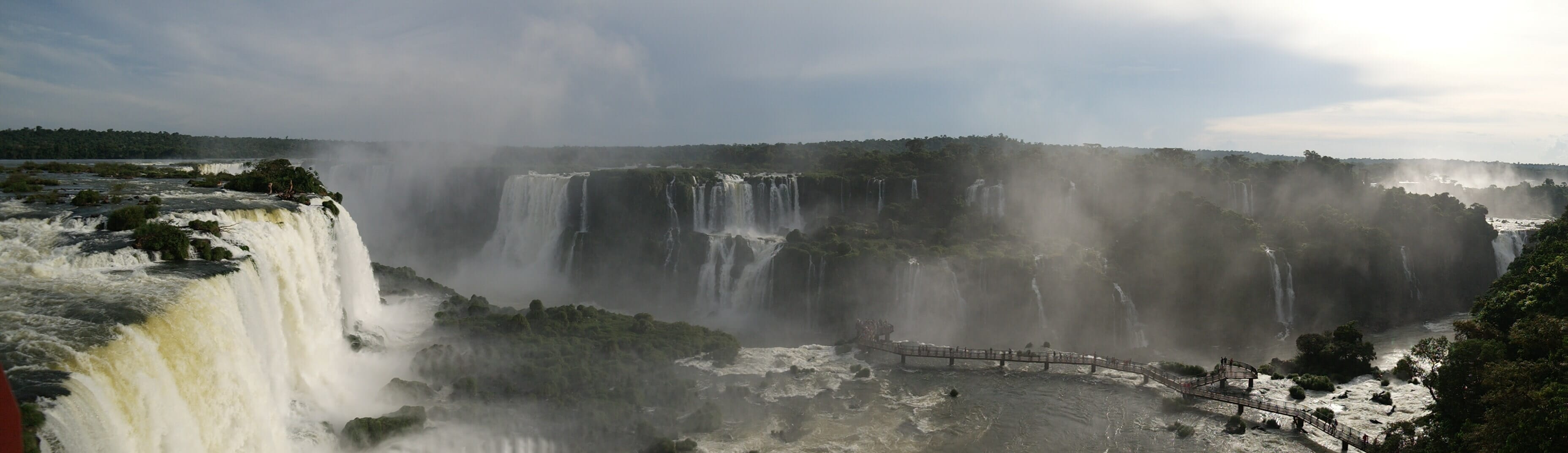
 After the visit to Itaipu we had just a few hours until the closing time of the waterfalls park. The driver took us to the park entrance and left, we had a quick lunch in one of nearby restaurants and ran to the park. To get to the waterfalls from the entrance you need to get on a bus and take some 15 minutes’ ride. As you get off the bus, there is the start of the path alongside the waterfalls. As you walk along this path, on the right there is a deep fissure in the ground, and across the fissure there is an endless chain of waterfalls. It is quite a long way to the end of the crack and all the way you have most amazing panoramic views on your right. There are a few lookouts where people can spend some time enjoying the views and taking pictures. In our humble opinion, the panoramic views of the waterfalls are absolutely out of this world. I felt like we had been carried over to one of fantasy worlds. Even though in Argentina you can get much closer to the waterfalls, there are no such views there. In Brazil you find yourself in the realm of cascading water which sparkles at the backdrop of lush tropical vegetation – the sight no words can describe!
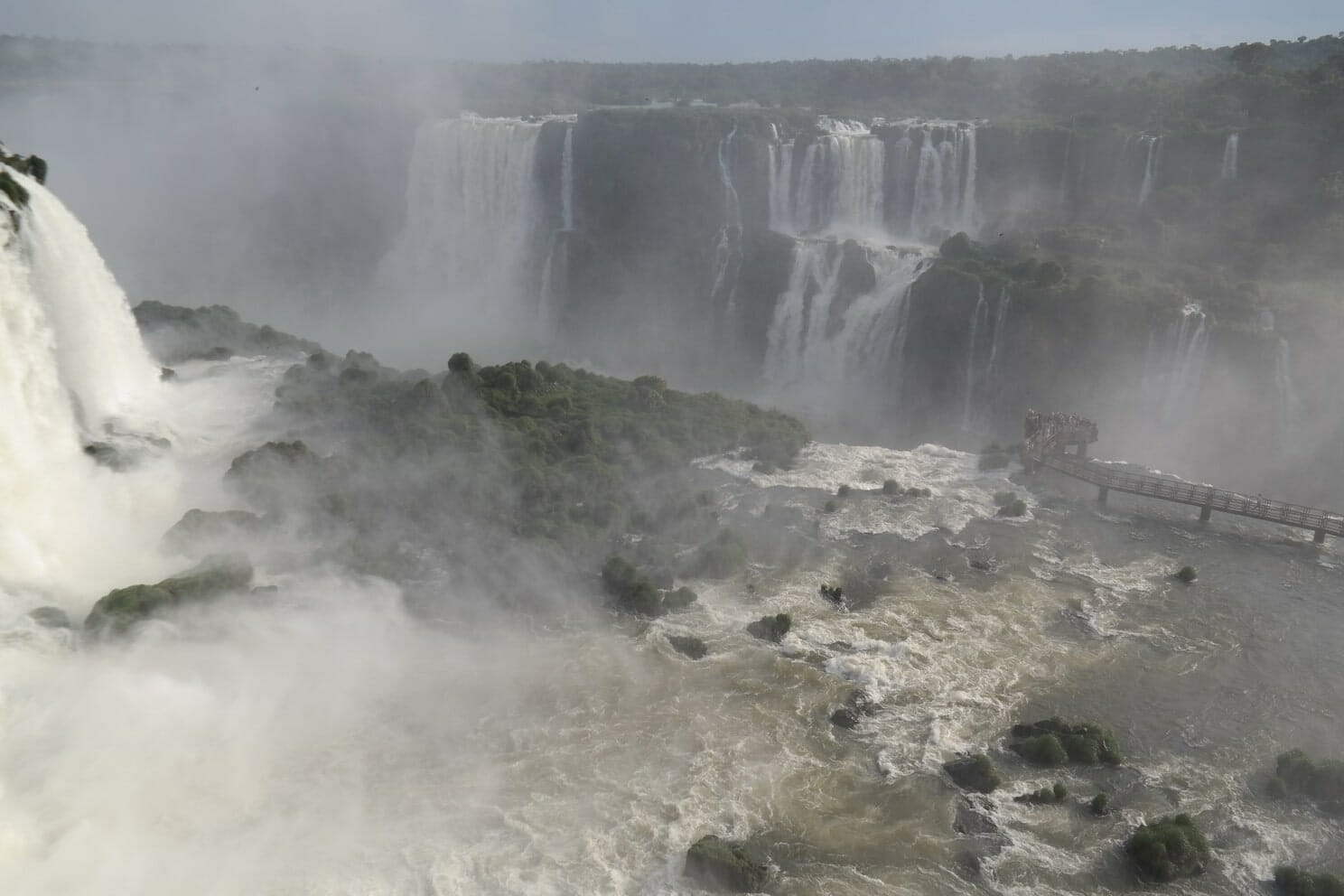
When you reach Garganta del Diablo, you can walk closer to the waterfalls on walkways. The view is fantastic from the walkways. Water dust is hanging in the air and some people put on raincoats, but it is possible to walk without them. It is difficult to take pictures there, as the camera lens gets splashed with water.
I felt so happy in this place and so grateful to life for giving me the chance to see all this amazing natural splendour.
And Igor agreed with me. We both were more impressed by the Brazil side of the waterfalls.
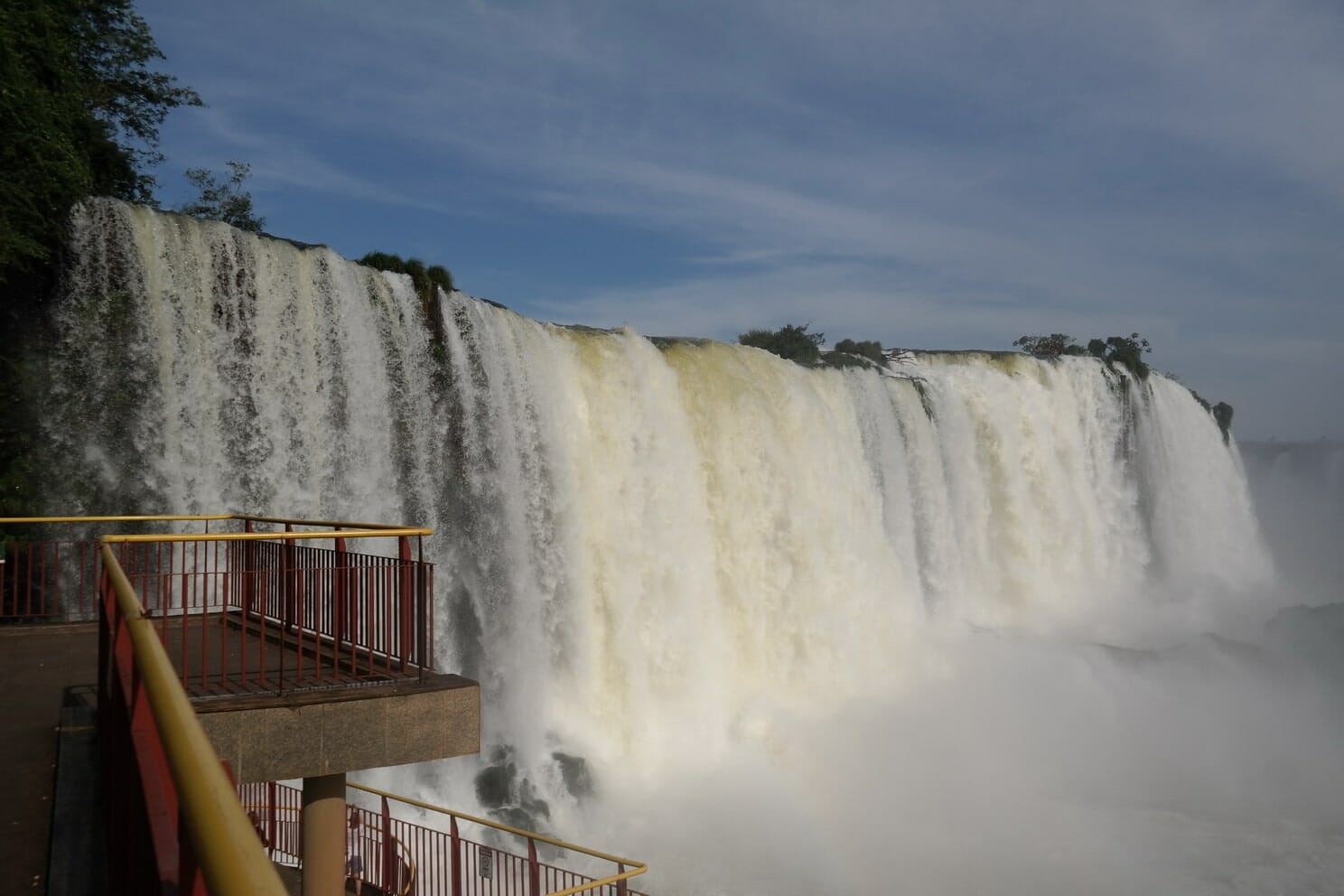
It is these views that have stayed in our hearts.
Ubiquitous coatis are roaming here too.