Hola, everyone!
Much water has flown under the bridge since we returned from our road trip on Carretera Austral. This post was written long ago, but since then we didn’t stay anywhere long enough to actually post it. Also I made it a priority to tell you about Perito Moreno glacier as the most impressive thing which happened to us. But the trip along
Carretera Austral was an important milestone of our journey and one of the main reasons why we chose Patagonia as our destination, so it’s simply impossible to omit this story.
So, we have travelled in a car slightly more than 1900 kms in 8 days. Straight away I am going to say that we never felt sorry that we rented a car instead of going by bikes. The road is very tough. It does have its smooth paved parts, but for most part it is gravel, with it’s condition varying from more or less bearable to absolutely horrible. The road is also very hilly, with some lengthy parts being proper serpentine.
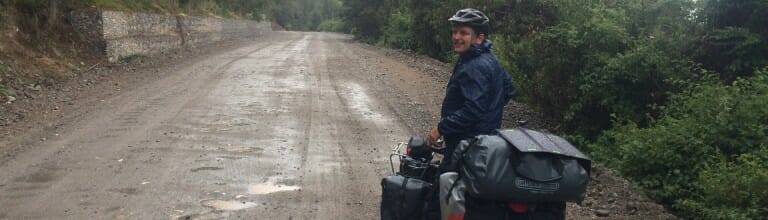
The moment we were on Carretera Austral, we started meeting all sorts of cyclists: on ordinary bikes, tandems, on long low bikes where you sit like in a chair and pedal with legs stretched to the front; we met men, women, whole groups of people, and what impressed me most – single women. In my opinion, all these people are heroes, even if they cycled not all the length of Carretera Austral. What stamina these people have, what tolerance to physical strain and discomforts, is beyond me.
Looking at them, we realised that even though we like cycling and are ready for certain difficulties which a cycling trip involves, we are definitely not ready to this level of difficulty.
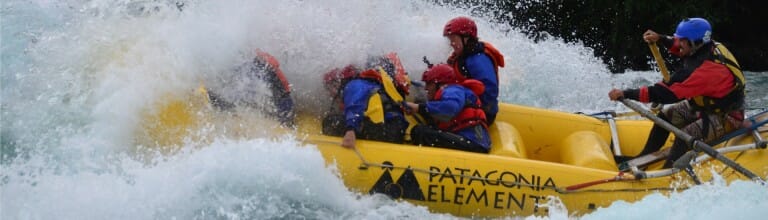
In order to get to Carretera Austral from Esquel, you need to go west to the Argentinian-Chilean border where Futaleufu is (if you read our story about rafting, you know the name). Futaleufu is not far from Esquel, in roughly 3 hours’ drive. We came there in the evening and devoted the next day to rafting, and in the evening went further. The first village on Carretera Austral after Futaleufu is called Villa Santa Lucia, but we didn’t manage to reach it on that day and spent a night in a small place called Puerto Ramirez. The morning of the next day took us to Villa Santa Lucia. The first thing we saw after turning onto Carretera Austral was a couple of backpackers travelling by means of hitchhiking. They were sitting on the side of the road. We had seen loads of hitchhikers in Argentina already. Why not help people and give them a lift?
We stopped and asked where the couple was heading. They were going to La Junta, a village in about 100 kms. We offered them to join us; the boot of our car was full with our cycle panniers, and the guys had two huge bagpacks. They were not in the least upset by this, they put themselves on the backseat with the bagpacks placed on them.
It is impossible to drive along Carretera Austal and not to take hitchhikers onboard. They are everywhere and in some places they get stuck for a few days as there is strong competition between them, they are more numerous than cars. Mostly students from Santiago travel this way, but we also met adult people, and foreigners.
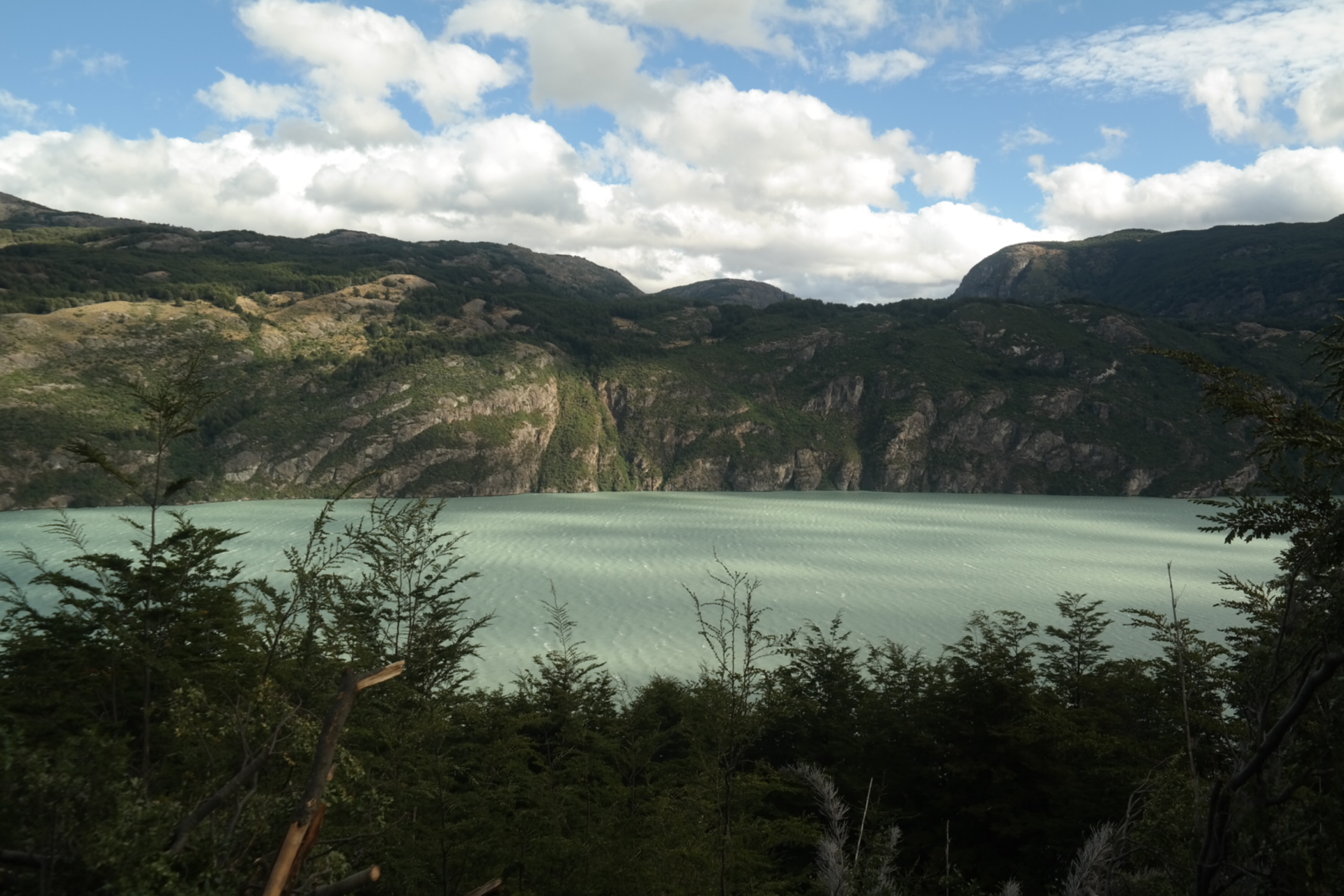 We took them almost every day since that first day. Of course it was nicest when they spoke English. In that first couple the guy spoke very good English and it was interesting to chat. The downside to giving someone a lift is that when you start chatting and get absorbed in the conversation, you stop noticing beautiful places around sabotaging the very reason why you came here and rented this car in the first place. Before we reached La Junta we were passing some amazing places, but I hardly noticed them, especially when the paved part of the road finished and I was focusing hard on both talking and trying to avoid potholes. I didn’t like this situation and decided not to give anyone else a lift (but I failed).
After the couple got off in La Junta, the weather got worse, it started raining. We had lunch, filled up the car and continued to the town called Coyhaique. It was still a long way to go and I didn’t know if we would make it to Coyhaique by nightfall. There were a few villages on the way, one of them called Puyhuapi. On the way to Puyhuapi it was very gloomy and dark. We didn’t stay long in Puyhuapi, went forward almost immediately. Carretera Austral runs through the village. At the exit it passes a small bridge. Next to this bridge there was another couple of hitchhikers, very young. I was going to pass them by. Having noticed us, the guys jumped up and seeing that we were about to pass by, they put their palms together under their chins, as if begging us to stop. My hands reacted before my brain, they turned the wheel and the foot pushed the brake. The guys were happy to hear that we were going to Coyhaique as this was exactly where they were hoping to get. This couple’s English was very limited so I tried to speak to them in my broken Spanish. We learnt that they were students from Santiago, the girl studied astronomy (funnily, her name was Luna, which is “Moon” in Russian) and the guy – physics.
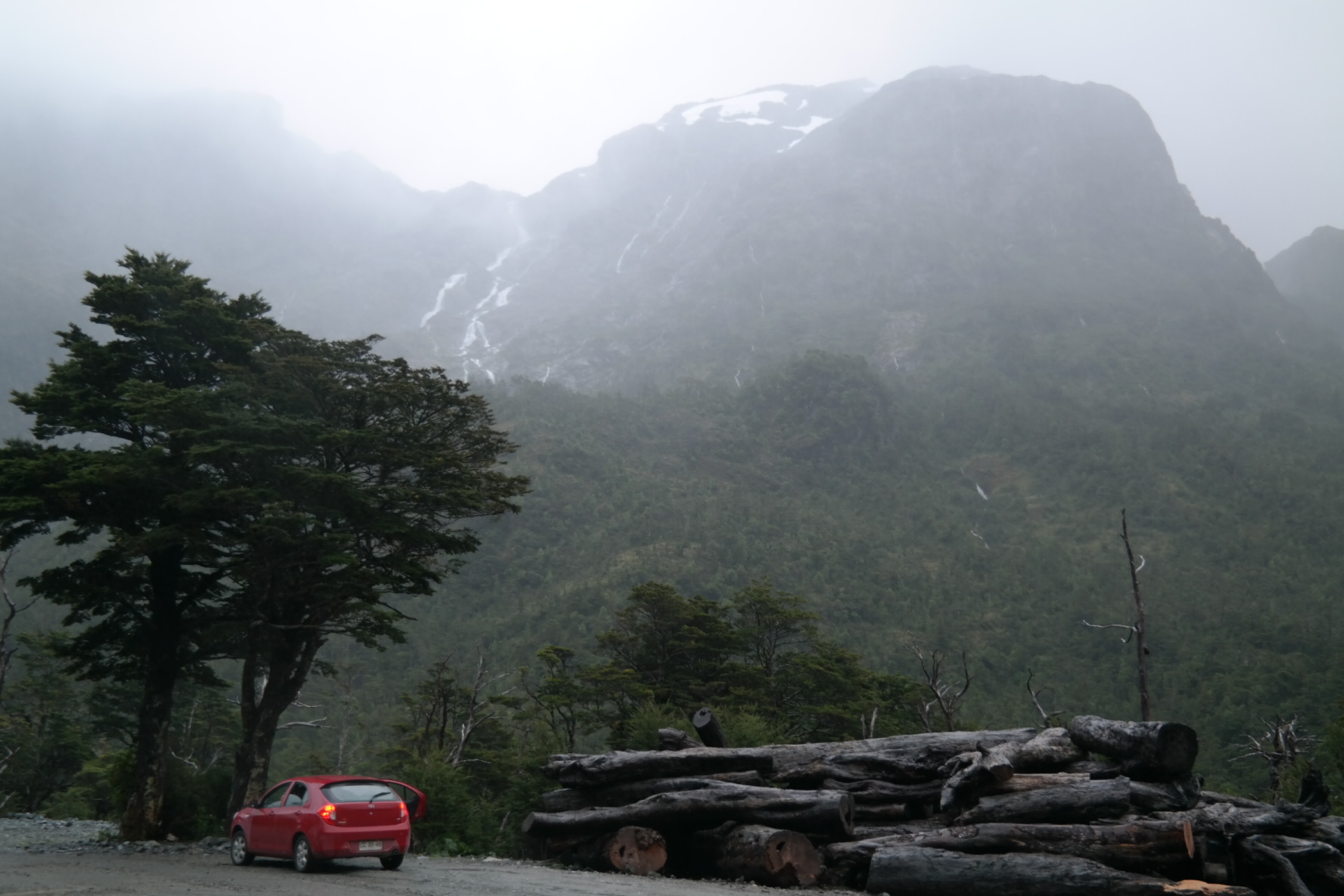 The weather was getting worse and worse, and when we entered the national park called Quelat, it reached its worst – all the sky was overcast, it rained and the wind was blowing hard. Through the shroud of rain we could see only a hint at the beauty of the places we were passing by. We are very sorry that we had such bad luck with the weather on that day, because the park was obviously one of the most attractive places on Carretera Austral.
The road leaves the park turning into the serpentine, it climbs the mountains through a series of hairpin turns. The climbs become very steep. Here I felt that the car was fully laden. The engine almost stalled a couple of times. You really need to think twice in such a place before taking passengers with lots of luggage onboard when driving in a small car with a weak engine. The ascent seemed endless, but somehow we managed.
Thankfully, soon after exiting the park the road became paved and we went at a normal speed. It started to get dark then. I was very tired, but we still had a long way to go to Coyhaique. We could potentially spend the night in a village on the way, but that would mean having to continue our way with our passengers tomorrow as well, as we promised them to get them to Coyhaique. I didn’t want it, and I decided to get to the town today, no matter what.
We ended up being on the way for a few more hours at night, and reached Coyhaique around midnight. After we arrived, we had a few funny moments to experience. We came to the dark and deserted downtown and asked our passengers where they wanted to get off. They answered that they didn’t know, they needed some camping. It was easy to say, but we didn’t have a map of the city where campsites would be shown. The guys didn’t have the map either. Making the youngsters get off the car in the middle of the night, with their huge bagpacks, in an unfamiliar place was out of the question. They tried to find something through Internet, but it was dead (which was no wonder). We decided to ride the streets at random and it worked – we quickly got lucky when we saw a few tents just off the road. It was a wild camping where people stayed, obviously those who didn’t want to pay for an organised camping. It was just a piece of green grass under the trees but enough to set up a tent and spend the night. The guys decided to stay there. We could do the same in theory, but it could mean that tomorrow morning it would be hard to find excuse not to take them with us again, as they already hinted a couple of times that after Coyhaique they want to go in the same direction as us. By this moment I was too tired to have strangers around and longed for some privacy so ignored the hint.
So the guys got off, we gave them a bottle of water as they didn’t even have anything to drink. Then we started looking for accommodation. It was much fun. It was nearly 1 am and all hotels we were passing didn’t have available rooms. Everything was full. After circling Coyhaique for a few times, we had to put up with the thought of going to campsite again, even though I was dreaming about a soft warm bed after such a long and tiring day. Eventually we managed to find an organised camping on the outskirts of the town. It was not much better than the wild one on the side of the road. The only difference was that it was in the woods and we had to pay for it. Igor went to set up the tent and I waited lying on the backseat of the car. It was 3 am when we fell asleep, being half alive with tiredness. It was the hardest and the longest day of all. After this I decided to take passengers only for shorter periods of time.
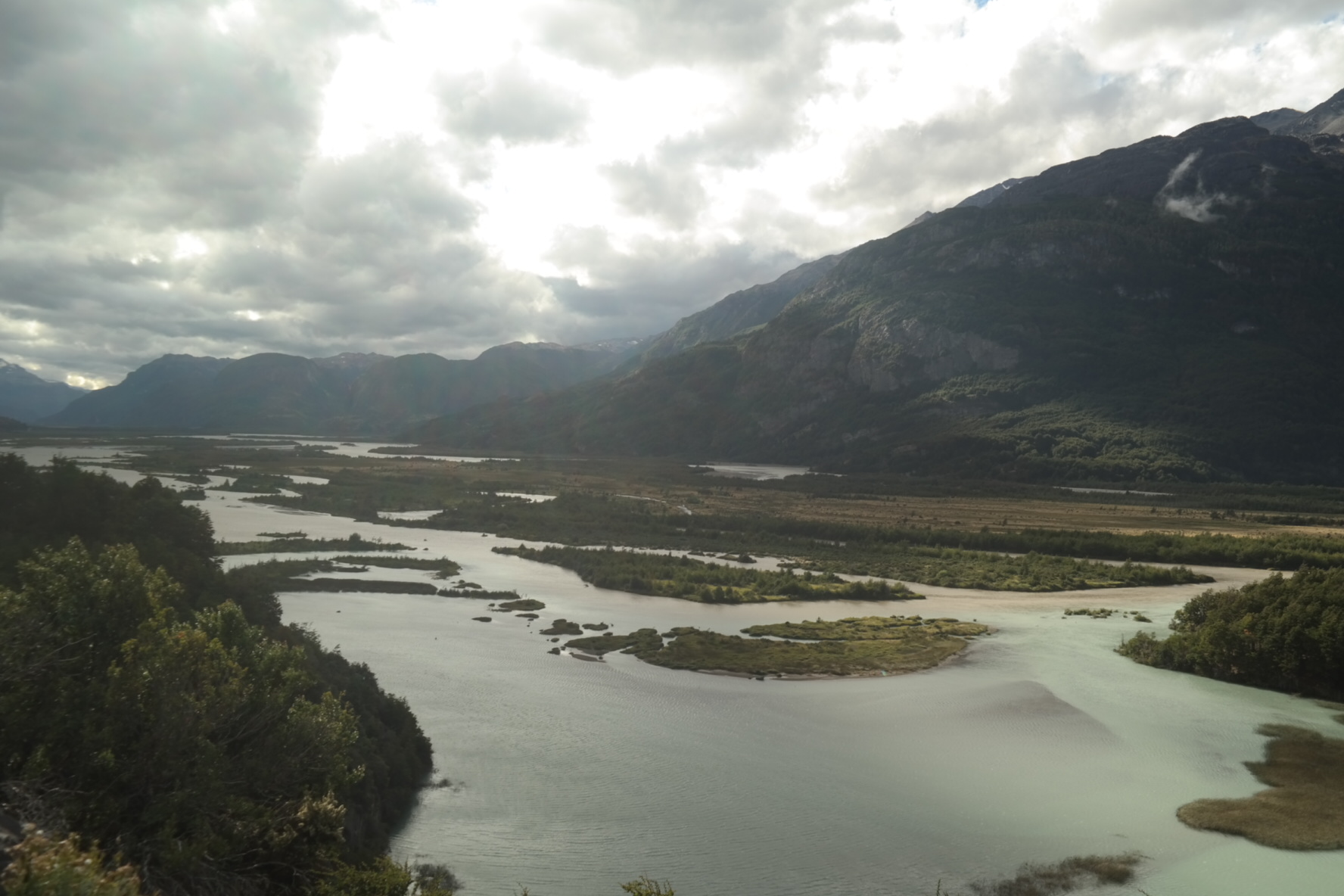 In Coyhaique we had breakfast, refuelled, took some cash and continued our way south. In the light of the day it was clear that the surroundings were quite pleasant. We saw some nice rock formations along the road. Today we wanted to get to the village called Puerto Rio Tranquilo where it’s possible to take an excursion to see well known marble caves (the place is called Catedral and Capilla de Marmol in Spanish, or Marble Cathedral and Chapel). This part of the road was quite difficult, asphalt was over, the road became very narrow, however the pavement was decent, for most part. There were fewer cars, but it was still hard to drive, as the road was narrow and winding, and those few cars which went in the opposite direction sprang out unexpectedly, and on narrow parts they didn’t even reduce their speed or make some space for you, forcing you out on the roadside. They are not very polite, Chilean drivers.
 We were also slowed down by the works on extensive portions of the road. Passing portions with works looks like this: the road is blocked and a queue is formed. Sometimes we had to wait for access for more than 20 minutes.
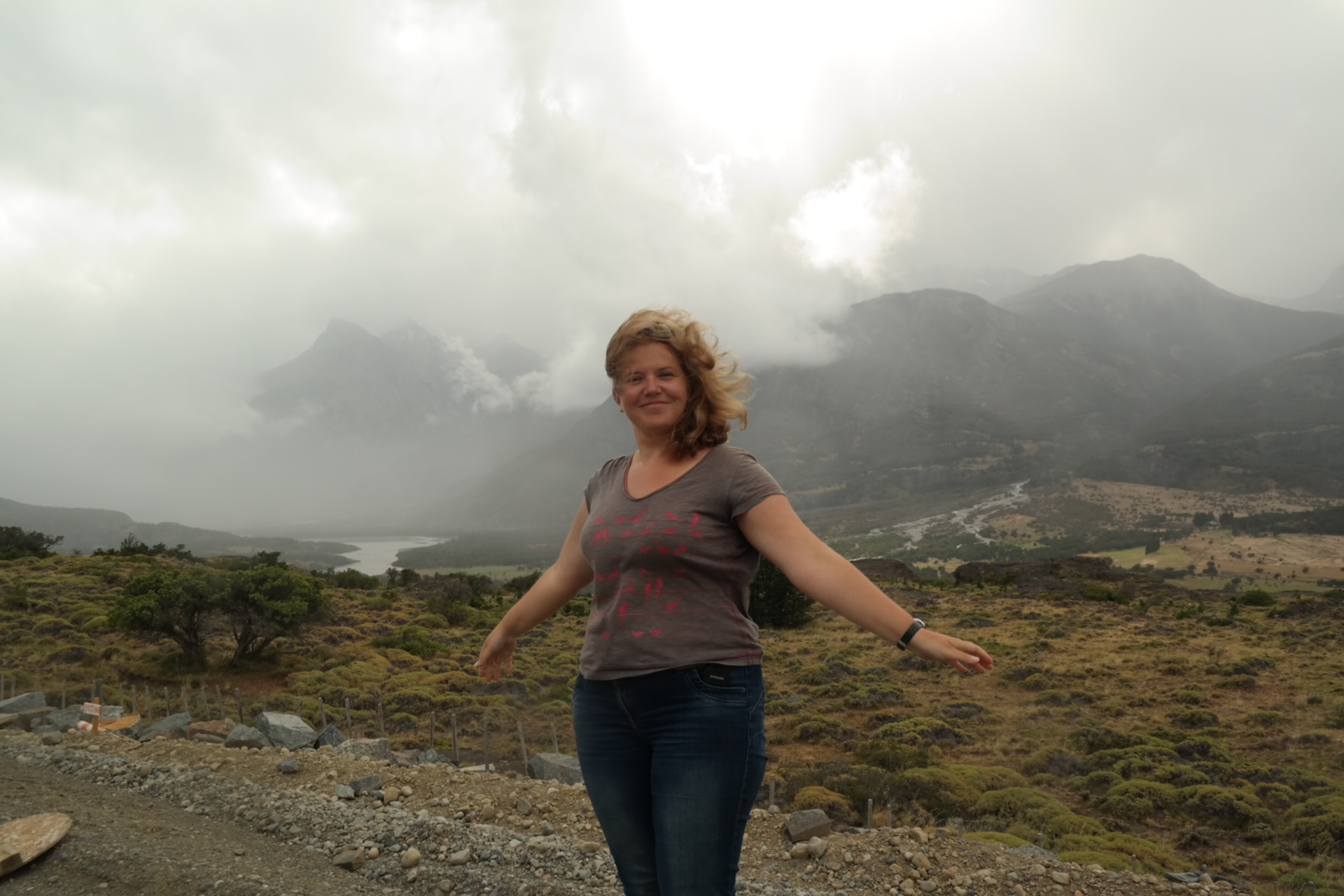
The road was passing by some really nice spots, however sometimes it was hard to stop to take pictures, due to the narrowness of the road and absence of hard shoulders. Closer to Rio Tranquilo the surroundings felt more and more remote, we started seeing some snowcapped mountains. The landscape seemed gloomy, probably due to the weather. It was getting dark when we approached the lake called General Carrera. This lake is huge, it’s second largest in South America. Argentina and Chile share the lake, the Argentinean side called Lago Buenos Aires. The lake is extremely beautiful due to unusual blue colour of water and surrounding mountains. I can compare it to Skadar Lake in Montenegro, there is a lot of similarity in them. Thankfully they are not similar in surrounding roads as the road along Skadar Lake is absolutely scary.
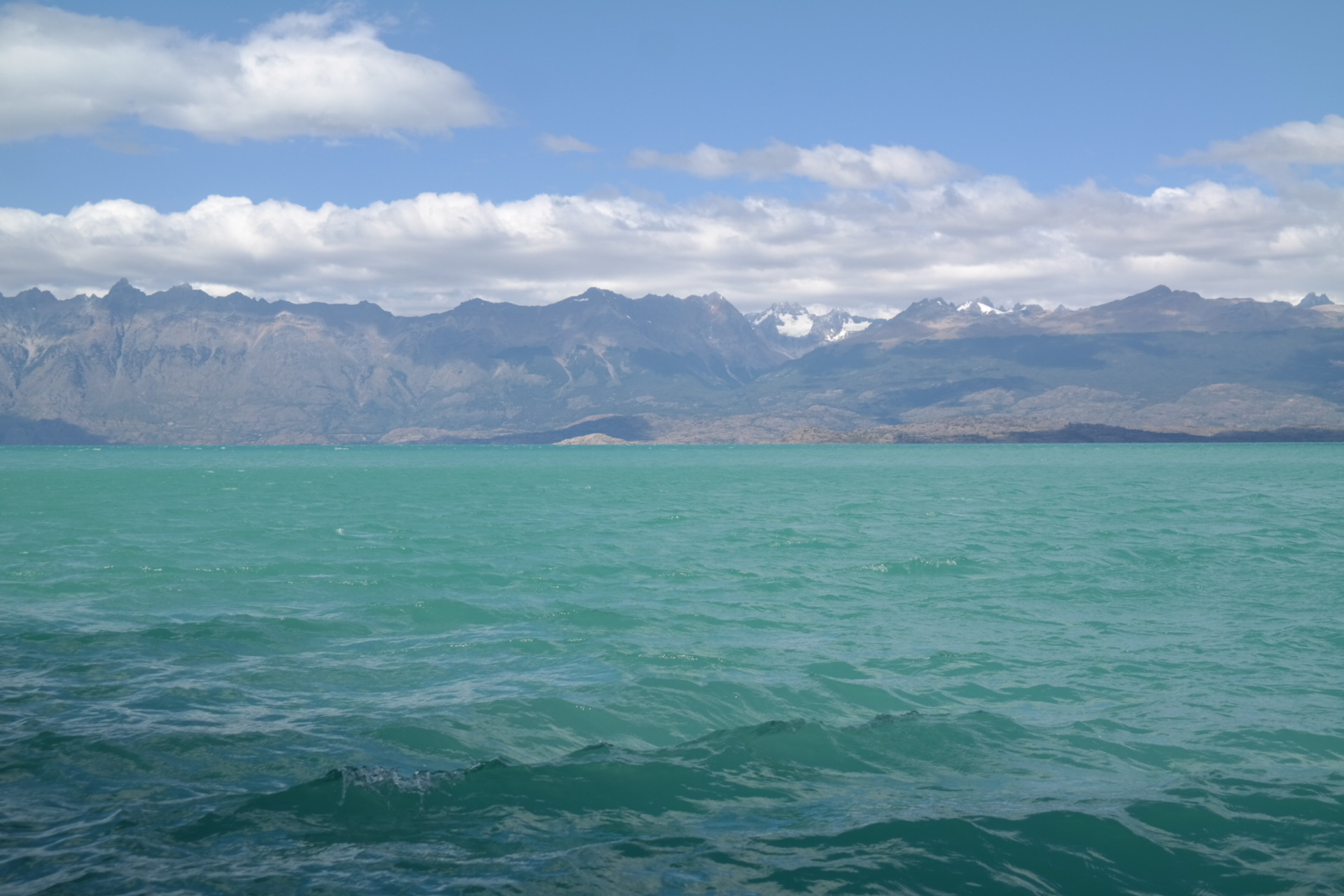 Closer to the lake the road started climbing a little and turned into a washboard, along which we jogged down for 10 more kilometres before we reached Rio Tranquilo. In the village we had the same story as in Coyhaique: all hotels were full. We only found beds in dorm rooms and one very ordinary hotel with an unusual price tag – 80£ per night which was absolutely ridiculous. So we headed for the camping again. We found it just in time – it started pouring, and gusts of wind were ferocious. It was pitch dark already. The campsite was the ugliest we’d ever seen. It had an absolutely uneven surface, not a meter of smooth ground, not a single tree – the place was good for anything but campsite. However it was full of tents. I suspect it was the only camping in the village. We set up our tent next to a couple of others and people wandering around at night were tripping on our ropes noisily (I think we were the only people who actually slept at night at campings). Setting up a tent when it is so windy and it rains is not much fun but Igor is a seasoned guy and not to be scared by such trifles ) Very soon we were having rest in the tent listening to cheerful exclamations of our neighbours at each strong (meaning almost hurricane like) gust of wind.
In the morning none of the owners turned up, so there was noone to pay – at least this campsite from hell turned out to be free.
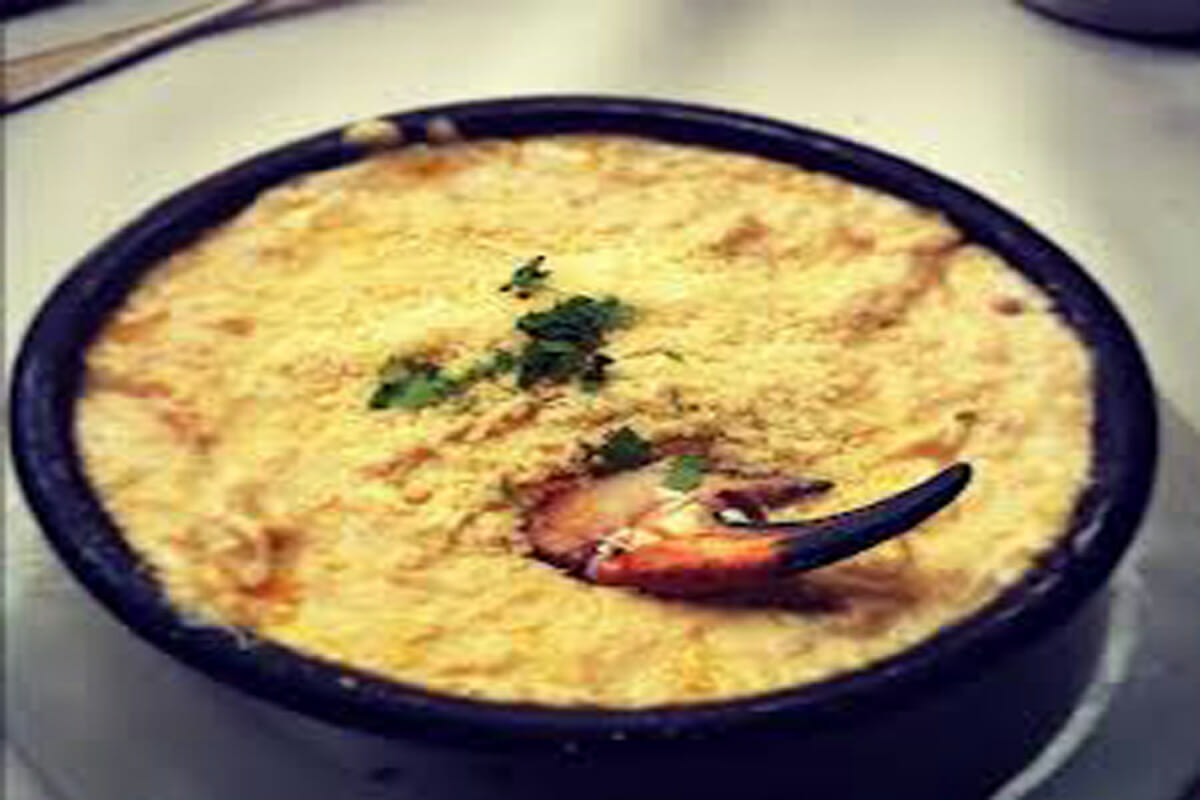 All in all, the village didn’t leave a very nice impression. The villagers didn’t look very friendly. When we were trying to find accommodation, many would close the door to our faces saying: “We are full” without a smile. When we went to have lunch, one restaurant was closed for siesta (which is right at lunch time) and in the other they told us they ran out of food because they had a big company of 6 people having reservation with them. Haha. We had some luck in the end having found a very nice restaurant which was at European level. I had a delicious unusual meal from crab meat there, which was called Pastel de Jaiba.
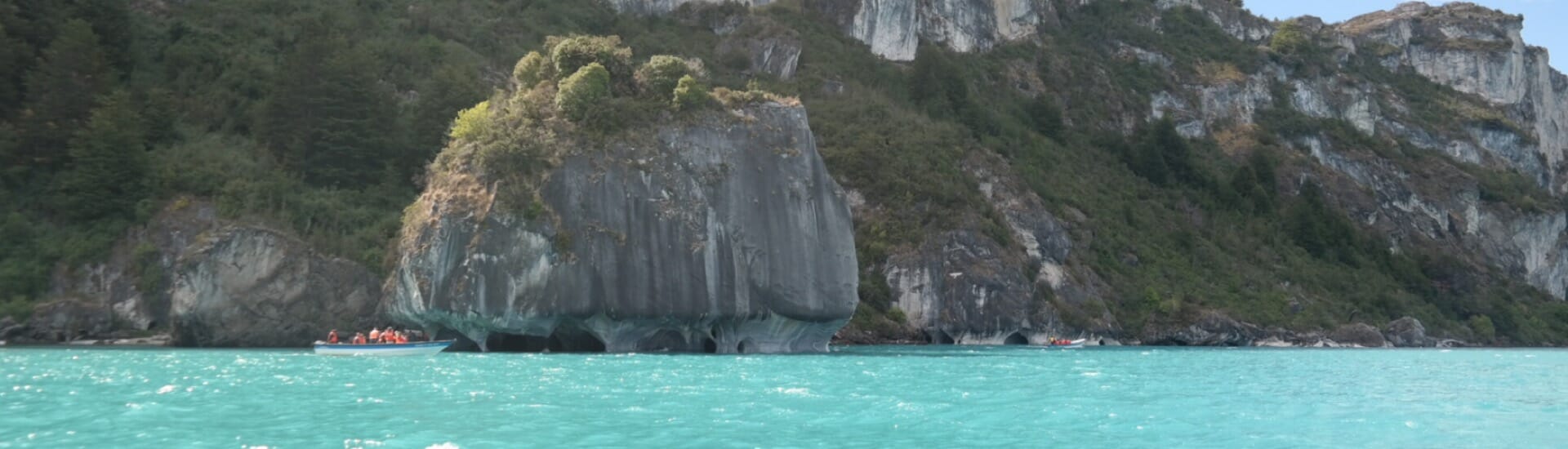
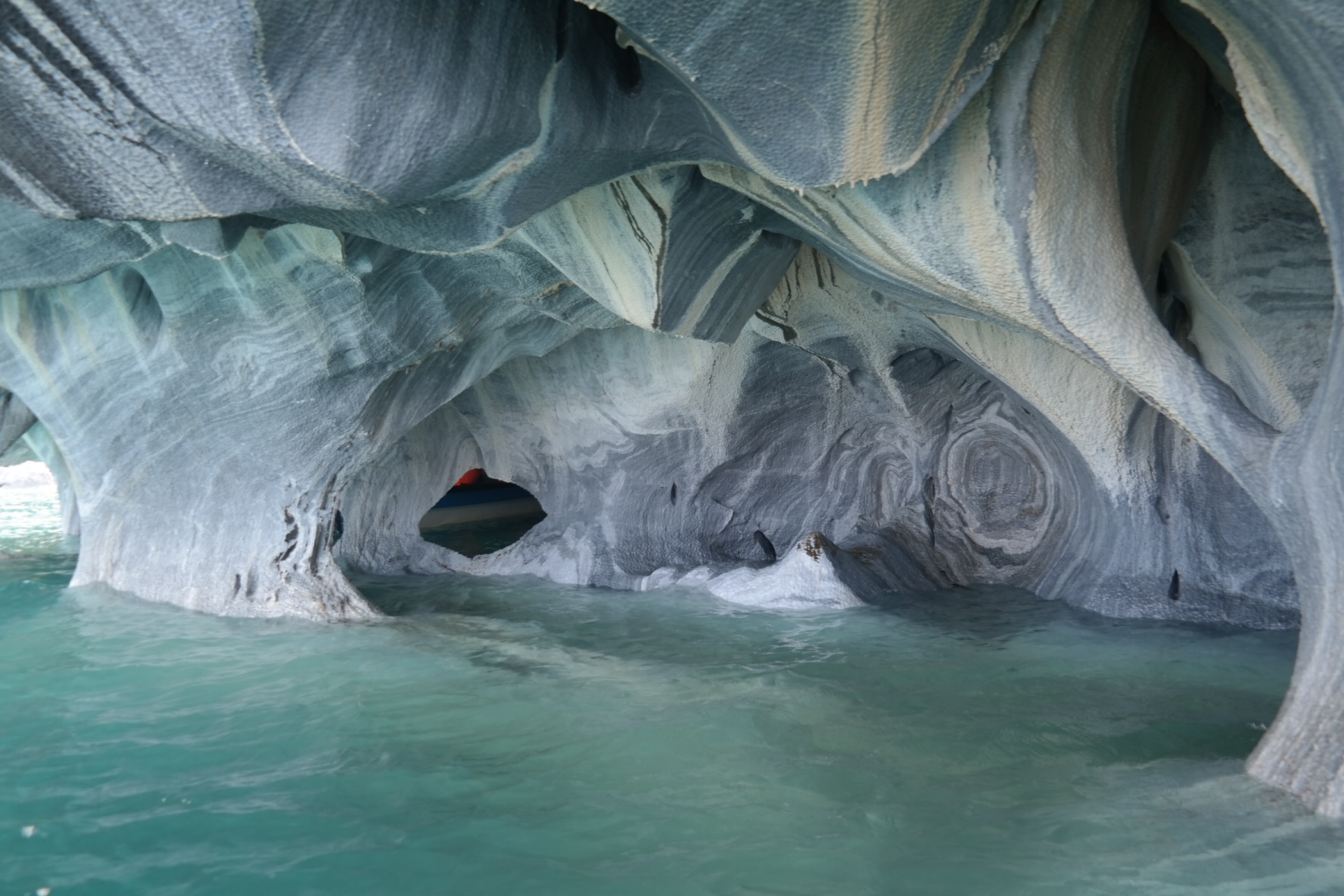 But this place has something really amazing, and this is the marble caves. Groups of 10 people are taken to the caves in a boat to see this unusual natural phenomenon. The marble rocks were outwashed from below and thus cavities were formed which look very picturesque. The walls of the cavities have unusual colour patterns, with grey or whitish background and blue-ish designs. They look gorgeous on photographs. This place was worth visiting, especially combined with a boat trip on a sky-blue lake.
II was quite windy on that day and there were big waves on the lake which became even bigger by the time we had to return. The boat was flying on the waves, up and down, and it was fun, if only a little frightening. I sat at the back on the right side, and the icy water splashed all over me so my face went numb eventually. So apart from aesthetically pleasant sensations from seeing the caves we got some sharp ones from the boat trip.
To be continued!