Hello again, dear ones!
Best regards to everyone from the town Puerto Natales in the south of Chile!
We have just finished a 5 days’ trek in the national park Torres del Paine, but we will tell about it later in another post.
After a long silence we feel like telling you about the most memorable impression first, and this was a trip to Perito Moreno glacier in Argentina.
The visit to the glacier was the only thing we had planned to do in El Calafate. After we checked in a hostel called Hostel de Glaciares Libertador, we decided to take a tour to the glacier from this hostel.
To pay for the tour we went to take cash to the centre of the town (which was an adventure in itself, as none of the 4 banks in El Calafate wanted to give us money, most of them for no reason, and one bank just didn’t have cash in any of its 4 ATMs. Argentina turned out to be horrible in this regard; we had had more than one issue withdrawing cash from ATMs).
We decided to have lunch in the downtown. We went to a pizzeria and while we were waiting for the order, we saw news on the TV. On the screen there was a picture showing Perito Moreno glacier and there was a text saying: Breaking news – La Ruptura de Perito Moreno (meaning “Rupture” as it is easy to guess). We were frightened in the beginning thinking some disaster was happening, but then I remembered reading something in the guide book about partial breaking of the glacier which happens every few years. On the TV picture we could see chunks of ice breaking off and falling into water.
When we came to the hostel reception and started booking the tour, the receptionist told us: “Do you know that you are very lucky? The glacier just started breaking down. It happens once every few years”.
I asked her when it can stop breaking down. She said it was unpredictable; it could happen at any moment.
Of course we felt impatient to see this phenomenon with our own eyes. Before I read that tourists coming to see Perito Moreno usually sit with cameras, ready to film huge chunks of ice falling into water with a mighty roar. This is the most spectacular thing to see. When the glacier is breaking down, these chunks fall every few minutes if not more often. I read a story by a ranger of the park Los Glaciares, where the glacier is located, where he described the sight as the most beautiful. But we had no guarantee at all that we still would be able to see it. I tried to calm down and not to think about. If we see it we are lucky, if not – oh well, what can we do.
On the next day at 8 am the bus was waiting for us, and we started our way to the national park. The glacier is located 80 kms from El Calafate. The guide told us that the glacier was still breaking. He also mentioned that there was an ice bridge formed there. I couldn’t imagine what he was talking about. The guide said jokingly that he called and arranged for the bridge not to fall before we come. As I had no idea about the rupture process I didn’t realise at that moment that the falling of the bridge is the final part of the breaking.
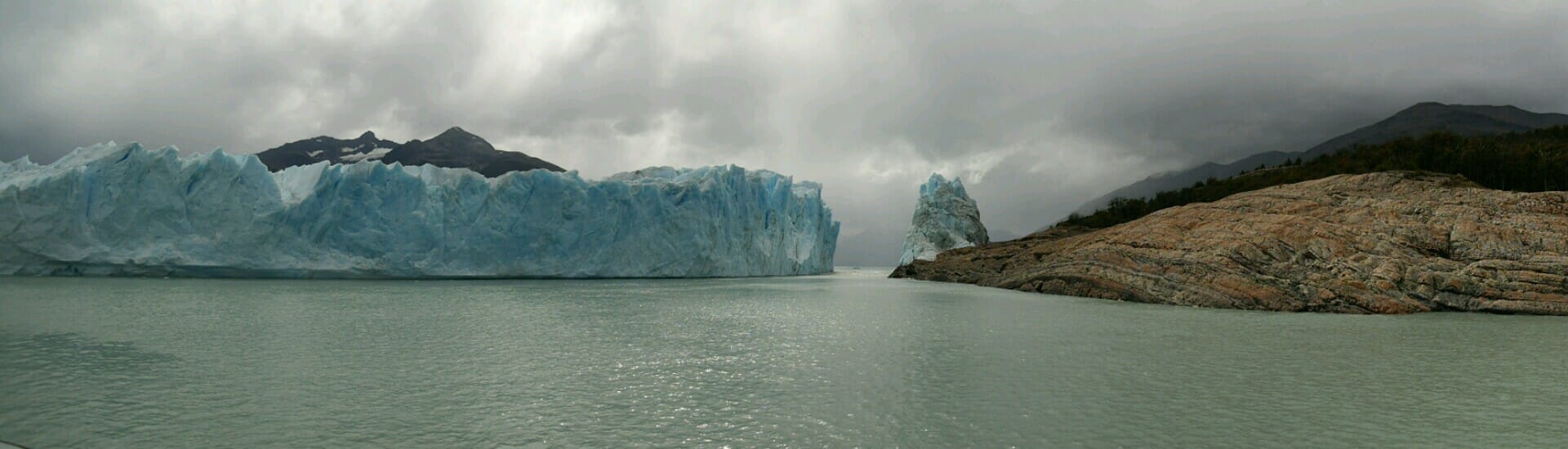
In two hours we were in the park and all the group started walking towards the glacier. Opposite to the glacier on the hill special walkways and balconies are built from where the glacier could be seen from all angles. Even the first glance at the blue wall of ice from afar makes you spellbound. It takes around 40 minutes to walk from the entrance to the first viewpoint from which you could see the right side of the glacier and the rupture zone. We walked slowly, taking pictures and video. We reached the view point and saw a crowd of people, with their cameras above their heads. This is when we saw the ice bridge. It was an impressive arch connecting the main mass of the glacier with the shore.
From this arch every few seconds huge chunks of ice were breaking off and falling slowly into water, like in slow motion, causing water to rise in enormous fountains and then forming gigantic waves spreading to the shore. It was really a fantastic sight.
Despite the fact the chunks were huge and the arch was getting thinner and thinner, it still seemed to be very solid.
I thought it would take it a while to finally collapse. I switched the camera to the photo mode and took this shot.
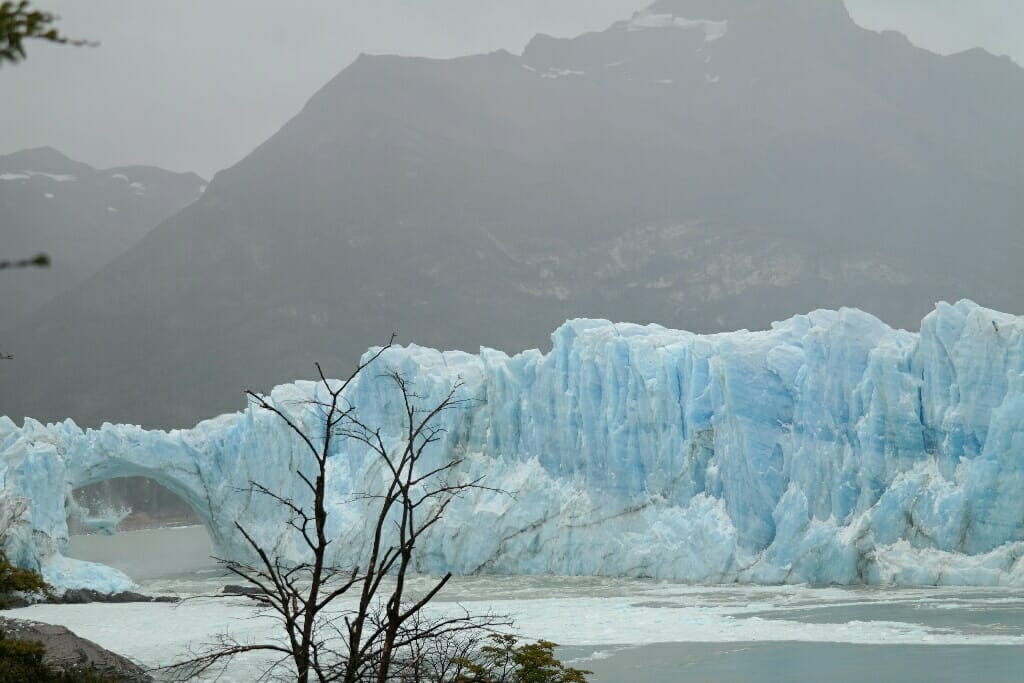
Hardly a moment passed after I pushed the button when I heard loud cheering of the crowd. I switched back to video and started filming thinking that the people were being happy at the sight of another huge chunk of the bridge falling off, and it took me a few moments to realise that the arch was breaking in front of our eyes! Its upper part collapsed and in the clouds of snow dust its pieces crumbled down, making the spectators go wild with excitement. People have been waiting for hours for this to happen, and it has just happened!
We couldn’t believe our luck. As I mentioned before, this process is repetitive and happens once a few years. It’s impossible to predict when it is going to happen next time. The reason for it is that the advancing ice come close to the shore and block the waters of the canal Brazo Rice which makes the water level rise and pressure build up. The water starts outwashing the bottom of the glacier and eventually forms a tunnel which turns into an ice bridge which then falls down to the canal. This picture illustrates this process very well.
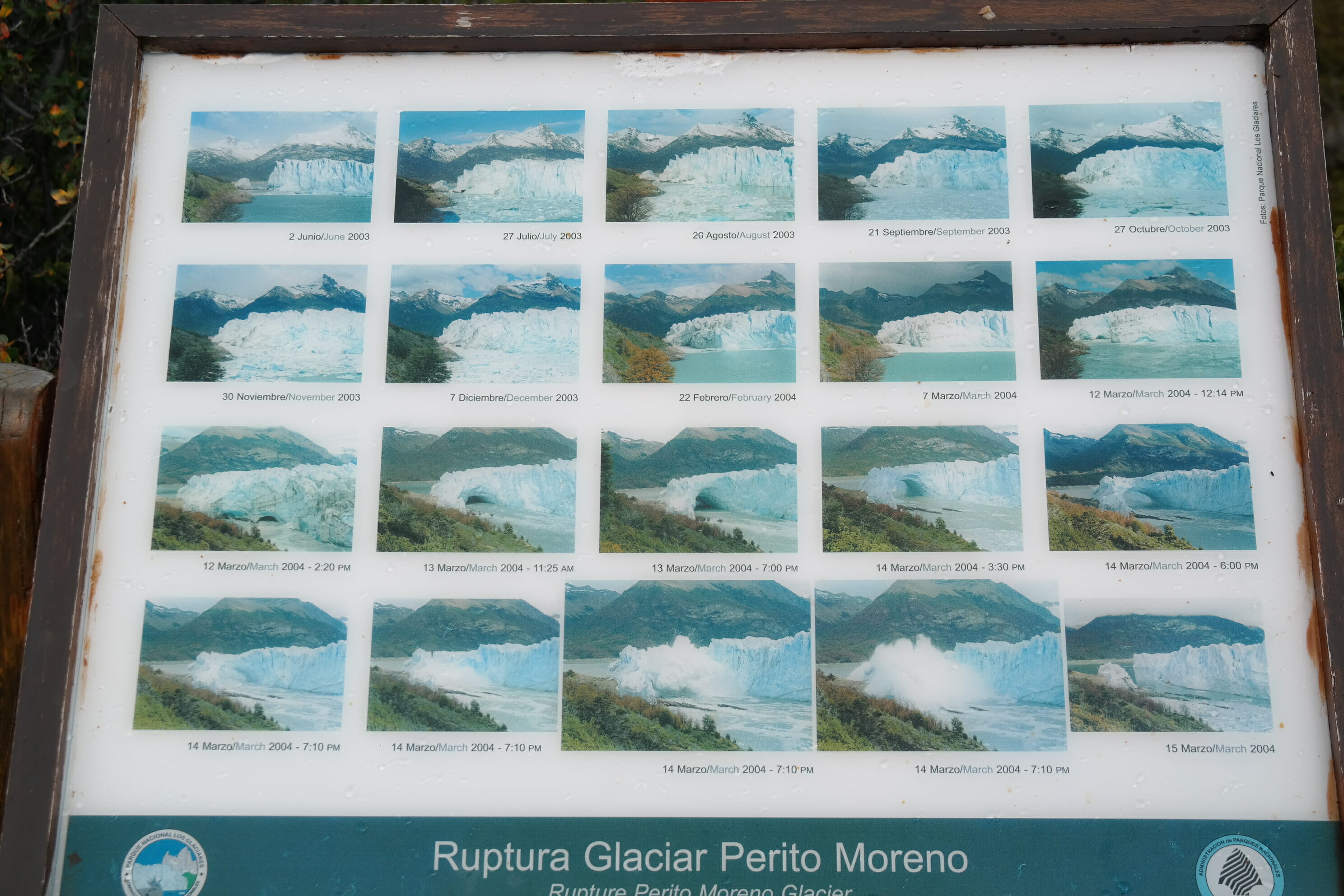
Last time the rupture happened in 2012 however no one could see the final part because it happened early in the morning, around 4 am. The previous breakdown which could be seen, took place in 2008. Before that the process repeated itself with varying frequency, at intervals from 2 to 10 years.
That makes it an amazing coincidence – not only to happen to be there at the time of the rupture but to arrive just in time to witness the final collapse! It took us a while to finally believe it. This is what I call good timing.
We’ve got a video – what I managed to take before the collapse of the bridge and the collapse itself.
You can see the pictures in the album here.[:ru]Дорогие друзья и родные!